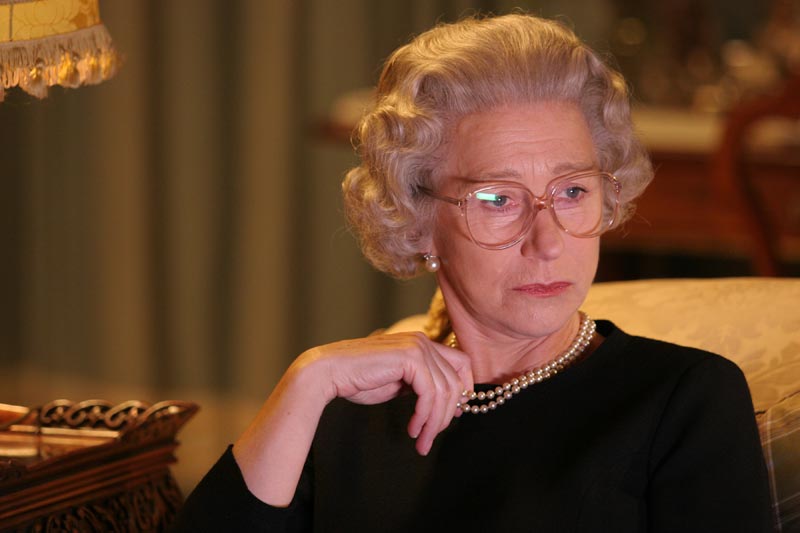
La lista de Schindler
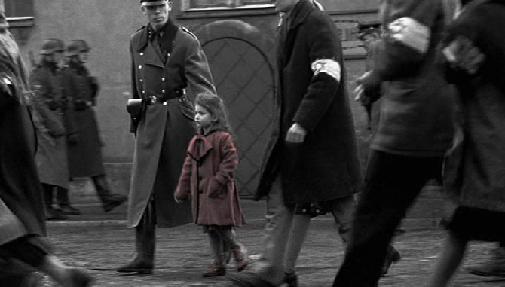

Estás sentado tranquilamente en tu casa, y de repente suceden cinco cosas. Las cinco suceden simultáneamente, y cada una de ellas requiere tu atención y solución inmediata.
1.- El teléfóno está sonando.
2.- El bebé está llorando.
3.- Alguien está llamando insistentemente a la puerta.
4.- Tienes ropa secándose en el exterior y notas que comienza a llover.
5.- Te has dejado abierto el grifo del lavabo y la casa se está inundando.
Se trata de analizar fríamente todas las opciones y a continuación decidir en qué orden nos ocuparíamos de ellas. Cada una representa una faceta de nuestras vidas, y nos servirá para descubrir a que le damos importancia y a que no.

El problema era que aquel domingo daban en el Cosmos un episodio de El Capitán Maravilla. Por eso, cuando Pico sacó un crujiente billete de a cinco, e hizo aparecer, como en un acto de magia, el digno rostro de La Corregidora, El Gallo y yo intercambiamos la mirada rápida de siempre.
—No saldremos con vida si vamos solos al Cosmos —murmuró El Gallo, que a los diez años hablaba exclusivamente en clichés cinematográficos.
El Capitán Maravilla era una serie de los años cuarenta, protagonizada por Tom Tyler, que había seguido rodando, durante décadas, por los cines más viejos del rumbo: castillos grandilocuentes venidos a menos, galerones oscuros, de nombre rimbombante —Majestic, Lux, Rívoli, Ópera, Palacio—, cuyo lustre se había empañado al devenir salas caldeadas de sudor y orines, multitudinarios recintos salvajes en los que el público aullaba a la menor ocasión, o derramaba líquidos sobre luneta, o sencillamente ponía punto final a cualquier asunto emprendiéndola a golpes con el espectador de al lado.
Y aunque en ese tiempo las latas que encerraban las aventuras de El Capitán Maravilla eran para nosotros el descubrimiento arqueológico de la década, no había en el rumbo nada más parecido a una penitenciaría que el torvo y siniestro cine Cosmos. O tal vez sí: mi escuela primaria, pero estaba cerrada ese día.
Así que seguimos tumbados a orillas de la banqueta, mirando el cielo apagado, de nubes blancas que se desplazaban y cambiaban de forma, hasta que El Gallo dijo de pronto:
—Si se nos pone difícil, podemos decir “¡Shazam!”.
Comenzamos a reírnos. “¡Shazam!” era la palabra que Tom Tyler pronunciaba para adquirir sus poderes en momentos peliagudos.
Supongo que algo ocurriría entonces, pero no recuerdo qué. Posiblemente seguimos tumbados en la banqueta, hasta que Pico extrajo de nuevo su crujiente billete de a cinco. El Gallo volvió a soltar un parlamento cinematográfico:
—Compramos los boletos cuando la función haya empezado. Nos sentamos en la fila adelante. Entramos a oscuras y salimos a oscuras. Cuando ellos se estén levantando, ya habremos cruzado la México-Tacuba.
En eso consistía todo. Cruzar México-Tacuba era penetrar en territorio comanche; ver evaporarse los derechos civiles; atravesar vecindades que efectivamente eran penitenciarías. Tropezar con borrachos que vociferaban a media calle, y con inhaladores de Resistol 5000 capaces de acuchillarte si pronunciabas un diptongo de más. Algo así.
De modo que nos levantamos y, desde Amado Nervo, avanzamos hacia el corazón de las tinieblas: el extremo oriente de Santa Julia. La marquesina del Cosmos anunciaba La picadura del escorpión, y también El escorpión de oro. Esperamos en la escalinata, sin mirar a nadie, hasta que inició la función. Entonces Pico compró los boletos y, en fila india, entramos en la sala. Nos instalamos en la primera fila, hundidos en las butacas, un poco lejos de todos.
El Capitán Maravilla era un arqueólogo que, al abrir la Gran Tumba, se negó a saquear los tesoros del faraón. Una sacerdotisa fantasmal lo recompensó entregándole un secreto: “¡Shazam!”, palabra compuesta por las iniciales de Salomón, Hércules, Atlas, Zeus, Aquiles y Marte. Quien las pronunciara adquiriría los poderes de dioses y héroes, a cambio de recuperar las joyas y combatir el mal. Nada más misterioso que esos cortometrajes antiguos, rayados y llenos de cortes, que parecían ruinas de otro mundo, los sueños de alguien sepultado hacía tiempo. Imágenes diluidas de una era en la que todo fue distinto.
Pero el plan de El Gallo falló. Olvidamos el intermedio: aquel momento fatal en que el cácaro cambiaba el rollo, y las luces se encendían, y una marabunta ardorosa se echaba a correr por los pasillos: fingir la lucha contra el mal, recordar que eran niños —y no sólo habitantes de la penitenciaría a la que habrían de volver cuando la función terminara.
En ese instante, nos descubrieron.
Lo supimos porque nos señalaron de lejos y creímos notar que algo había cambiado en sus miradas (ese algo era lo que nos mantenía alejados del Cosmos).
Cuando la luz se apagó, vinieron a sentarse en la fila de atrás. Llegaron acompañados por un silencio cargado de significados atroces. Algo que quería decir: “sabemos quiénes son”, “los hemos visto antes”. El Gallo y yo nos miramos de reojo.
Había comenzado El escorpión de oro, cuando alguien pateó la parte trasera de mi butaca. El corazón me galopaba dentro del pecho, pero ni siquiera parpadeé. De pronto, alguien expulsó un gargajo y lo estampó con brutalidad, no recuerdo si en mi nuca, o en la de Pico, aunque espero que haya sido en la de él. El Gallo dijo:
—Vámonos.
Caminamos hacia la puerta bajo el haz de luz en que volaba El Capitán Maravilla. Pero no pudimos salir del territorio comanche. Nos metieron a empujones a un baño, encharcado de orines. Uno inmovilizó a Pico, torciéndole los brazos por la espalda. Otro, de un manotazo, tiró los gruesos lentes de El Gallo. Hoy deben estar secuestrando o asaltando bancos. Tenían un talento especial para desarrollar esa clase de biografía interesante.
—¿Qué vienen a hacer aquí, putos?— preguntó El Jefe (siempre había un jefe).
Yo miré a El Gallo. Dije:
—¡Shazam!
Y, por un instante, un rayo de júbilo brilló en sus ojos. Pude verlo antes de que El Jefe soltara el puñetazo que hizo rebotar mi cráneo contra el mosaico mojado.
De Mauleón. Periodista y escritor.
Es autor del libro Los lugares oscuros, de próxima publicación.
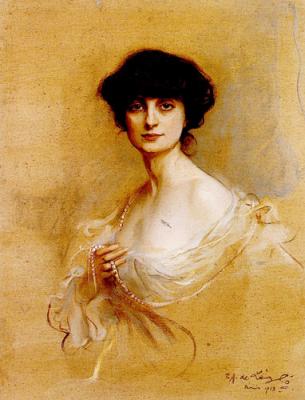
Anna-Elizabeth de Brancovan, condesa de Noailles, escritora y reina intelectual de los salones de París hasta la llegada de la Gran Guerra europea, nació en la capital francesa en 1876, en una familia de antiguos linajes griegos y rumanos. Crece en un ambiente de preocupación artística y formación literaria y poética; lectora asidua y apasionada sobre todo de poesía y novela. Condesa por su matrimonio con Mathieu de Noailles, se interesó también por la política de una f orma comprometida y valiente. Tuvo un largo romance con el ideólogo Maurice Barrès. Fue admirada como mujer y como escritora por muchos intelectuales de la época, como Daudet, Paul Valéry, Jean Cocteau, François Mauriac, Pierre Lotti, Francis Jammes, Enrique Larreta; conoció y trató a escritores como D’Annunzio, Rilke, Rostand, Tagore, Marcel Proust... A su muerte, acaecida en 1937, había recibido los máximos honores públicos de Francia y era miembro de la Real Academia Belga, siguió escribiendo hasta el último día.
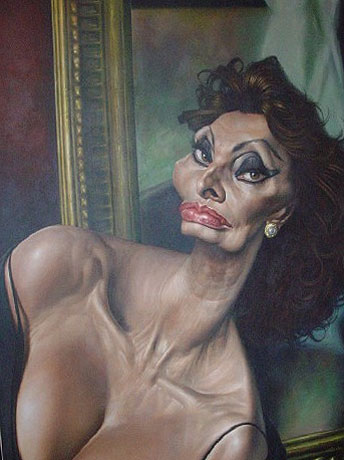
Sebastian Kruger was born in Hamlin, Germany in 1963. He studied painting and graphic arts and quickly moved on to make his living as a caricaturist, illustrator, and painter.
Kruger’s works are appreciated and collected by many Hollywood notables, and his painterly twists on Bogart, Schwarzenegger John Wayne, The Rolling Stones, are classics of their kind.
Perhaps never before has an artist displayed such an acute ability to capture the essence of those who occupy the public eye.
Perhaps Kruger’s most remarkable talent is his ability to bring diverse painting techniques and styles to a given subject. Kruger’s works range from pencil drawings, to near abstract paintings and then to the near photo realistic, and he has mastered each difficult variant with remarkable aplomb. Though the foundation of most caricature may rest in the exaggeration of the certain of the subjects features, Kruger often ignores the obvious, and focuses on more subtle aspects, still conveying the essence of his subject in a most profound and amusing fashion. Despite such exaggerations and maniacal morphs, Kruger approaches nearly all of his subjects with a level of respect and sincerity. His goal is to reach inside of them and pull out the very essentials of their character. This requires a certain empathy on the part of the artist, as well as the requisite artistic skills.
Sebastian Kruger has had three popular art books published of his works and has a yearly art calendar from Morpheus. Kruger’s art can be seen frequently in Playboy magazine and has also been featured in the likes of Stern, L’Espresso, Penthouse, and Der Spiegel and USA Today. He has recently been working on select motion picture projects.
claramente es una provocación al sentido común lo que esta gente pretende. Y tengo que haceros una confesión, por la que espero que no me condeneis: durante algún tiempo fui 'gay'.
La cosa empezó a los 9 años, cuando unos perversos primos míos de 14 y 16 años me hicieron jugar con ellos a frotarnos desnudos en la piscina. A mí no me pareció del todo bien, pero como se esforzaron en convencerme de que era un juego, acabó por parecerme normal, y al llegar a la pubertad me empecé a sentir atraido por chicos, en lugar de por chicas, que es lo natural y lo correcto. El no hablarlo con gente sana hizo que callese en la depravación una y otra vez, hasta que me dí cuenta pasados los 18 de que aquello no estaba bien, me puse en manos de un psiquiatra al que le debo mi salud mental actual (en perfecto estado, tengo que decir), y quedé sano y salvo, el Señor me acogió en su seno de nuevo y hoy vivo por fin libre de culpa y pecado.
Un abrazo con la mano alzada al cielo y el orgullo español en la mirada, camaradas!
_________________
"Una sola raza para una sola patria"
Forista experto
Registrado: 21 Feb 2006
Mensajes: 1114
Ubicación: EL BUNKER
MensajePublicado: Dom Jul 02, 2006 7:13 pm Asunto: Responder citando
me parece estupenda tu recuperacion y si estas arrepentido Dios te perdona. as tomado el camino correcto y eso es lo importante.
un saludo.
VIVA CRISTO REY
ARRIBA ESPAÑA

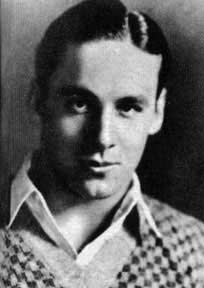
George O’Brien (April 19, 1899 - September 4, 1985) was a publicly popular actor of the silent film era and into the talkie era of the 1930s.
Born in San Francisco, California, O’Brien was the son of a policeman who later became police chief of San Francisco and then California Director of Penology. O’Brien was a popular college athlete before enlisting in the United States Navy to fight in World War I, then as a stretcher bearer in the marine corps. The young war veteran came to Hollywood, California in his early twenties and began his acting career in bit parts and as a stuntman. One of his earliest roles was in in the 1922 George Melford directed drama Moran of the Lady Letty, most notable for starring Rudolph Valentino. In 1924 O’Brien received his first starring role in the drama The Man Who Came Back opposite the English actress Dorothy Mackaill. That same year he was chosen by the famed movie director John Ford to star in his first film The Iron Horse. The film was an immense success at the box-office and O’Brien made four more films for Ford. In 1927 he starred in Sunrise opposite Janet Gaynor, which won three Academy Awards, was directed by F. W. Murnau, and remains widely considered by critics to be one of the finest and most powerful films ever made.
O’Brien would spend the remainder of the 1920s as an extremely popular leading man in films; often starring in action and adventure roles alongside such publicly popular actresses of the era as Alma Rubens, Anita Stewart, Madge Bellamy and Janet Gaynor.
O’Brien married the actress Marguerite Churchill on July 15, 1933 and the couple had a son, Darcy O’Brien in 1939 who would become a successful writer and a daughter, Orin O’Brien who would become a double bassist with the New York Philharmonic. The couple divorced in 1948.
With the advent of sound, George O’Brien became a popular star of Westerns and rarely took parts outside of the Western film genre. Throughout the 1930s, O’Brien was a consistent Top Ten box-office draw appearing in scores of Westerns, often atop his horse named Mike.
George’s height was either 5’11" (1.80m) or 6’0½" (1.84m).
During World War II, O’Brien re-enlisted in the United States Navy where he served in the Pacific and was decorated several times. He left service with the rank of captain, having four times been recommended for the rank of admiral [citation needed]. George O’Brien suffered a heart attack and was bedridden the last few years of his life. He died in 1985 in Tulsa, Oklahoma, USA.
For his contribution to the motion picture industry, George O’Brien was awarded a star on the Hollywood Walk of Fame at 6201 Hollywood Blvd., in Los Angeles, California.
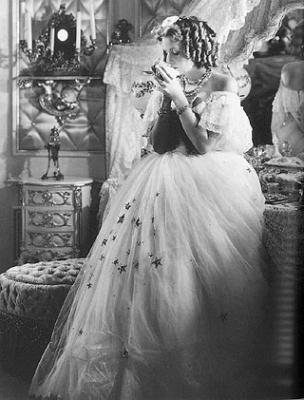

"Waltzing Matilda" is Australia’s most widely known folk song, and one that has been popularly suggested as a potential national anthem many times.
The lyrics were written in 1895 by the poet and nationalist Banjo Paterson, who set them to a slightly different tune. Extensive folklore surrounds the song and the process of its creation, to the extent that the song has its own museum, the Waltzing Matilda Centre of Winton, Queensland.
Official status
There have long been persistent calls for the establishment of Waltzing Matilda as the national anthem over the current national anthem, "Advance Australia Fair". The song is recognisable and easily sung, but its lyrics, narrating the story of a swagman, the Australian equivalent of a hobo, render it unlikely to ever gain acceptance in official circles. Many Australians, however, continue to regard it with great affection. Some have suggested using the same tune, but with different lyrics, but supporters argue the lyrics contribute substantially to the song’s character.
The song enjoyed a brief period of official recognition as the Australian national song (coexisting with "Advance Australia Fair" as the National Anthem). It was used at the Montreal Olympic Games in 1976, and, as a response to the New Zealand All Blacks haka, it has gained popularity as a sporting anthem for the Australia national rugby union team. It is also performed, along with "Advance Australia Fair", at the annual AFL Grand Final. As of 2006 it has no official status, but it continues to be used unofficially (and sometimes in error) in many contexts.
[edit] The song’s appeal
Reasons for the strong empathy Australian’s feel for this song includes its:
* appeal to a rural ideal,
* featuring a underdog or anti-hero,
* status as unofficial,
* links to an historical shearers’ strike that was foundational to the labour movement in Australia, and
* use of many obsolete words and phrases that give native Australian English speakers an insiders knowledge about ths song’s meaning that distinguishes them from outsiders.
[edit] Lyrics
Once a jolly swagman sat beside a billabong,
Under the shade of a coolibah tree,
And he sang as he sat and waited while his billy boiled
"Who’ll come a-Waltzing Matilda, with me?"
Waltzing Matilda, Waltzing Matilda
Who’ll come a-Waltzing Matilda, with me
And he sang as he sat and waited while his billy boiled
"Who’ll come a-Waltzing Matilda, with me?"
Along came a jumbuck to drink beside the billabong,
Up jumped the swagman and seized him with glee,
And he sang as he talked to that jumbuck in his tucker bag,
"You’ll come a-Waltzing Matilda, with me".
Waltzing Matilda, Waltzing Matilda
Who’ll come a-Waltzing Matilda, with me
And he sang as he talked to that jumbuck in his tucker bag,
"You’ll come a-Waltzing Matilda, with me?".
Up rode the squatter, mounted on his thoroughbred,
Down came the troopers, one, two, three,
"Where’s that jolly jumbuck you’ve got in your tucker bag?"
"You’ll come a-Waltzing Matilda, with me".
Waltzing Matilda, Waltzing Matilda
Who’ll come a-Waltzing Matilda, with me
"Where’s that jolly jumbuck you’ve got in your tucker bag?",
"You’ll come a-Waltzing Matilda, with me?".
Up jumped the swagman, leapt into the billabong,
"You’ll never catch me alive," said he,
And his ghost may be heard as you pass by the billabong,
"Who’ll come a-Waltzing Matilda, with me".
Waltzing Matilda, Waltzing Matilda
Who’ll come a-Waltzing Matilda, with me
And his ghost may be heard as you pass by the billabong,
"Who’ll come a-Waltzing Matilda, with me?"
Spoiler warning: Plot and/or ending details follow.
The song narrates the story of an itinerant worker making a crude cup of tea at a bush camp and stealing a sheep to eat. When the sheep’s owner arrives with three police officers to arrest the itinerant worker, he drowns himself in a small lake and haunts the site. The lyrics contain many distinctively Australian words, some now rarely used in Australian English outside this song. These include:
swagman
the Australian equivalent of a hobo; a swagman is a romanticised figure who travelled the country looking for work, usually sporting a hat hung with cork to ward off flies. The swagman’s "swag" was his bundle of belongings.
waltzing
derived from the German term auf der Walz, which means to travel while working as a craftsman and learn new techniques from other masters before returning home after three years and one day, a custom which is still in use today among carpenters.
Matilda
a romantic term for a swagman’s bundle. See below, "Waltzing Matilda."
Waltzing Matilda
from the above terms, "to waltz Matilda" is to travel with a swag, that is, with all one’s belongings on one’s back wrapped in a blanket or cloth. The exact origins of the term "Matilda" are disputed; one fanciful derivation states that when swagmen met each other at their gatherings, there were rarely women to dance with. Nonetheless, they enjoyed a dance, and so they danced with their swags, which was given a woman’s name. However, this appears to be influenced by the word "waltz", hence the introduction of dancing. It seems more likely that, as a swagman’s only companion, the swag came to be personified as a woman.
Another explanation is that the term also derives from German immigrants. German soldiers commonly refered to their greatcoats as "Matilda" supposedly because the coat kept them as warm as a woman would. Early German immigrants who "went on the waltz" would wrap their belongings in their coat and took to calling it by the same name their soldiers had used.
billabong
a stagnant pool found along the side of a river where eddies and directional changes of the water keep it from moving.
coolibah tree
a kind of eucalyptus which grows near billabongs.
jumbuck
a sheep. A "jombok" is a large, fluffy cloud that drifts across inland Australia. The Indigenous Australians, when they saw sheep for the first time, were reminded of jomboks and called them a similar word. An alternative explanation is that it is an Aboriginally pronounced "jump up."
billy
a can for boiling water in, usu. 2-3 pints.
tucker bag
a bag for carrying food ("tucker").
troopers
policemen.
squatter
Australian squatters started as early farmers who raised livestock on land which they did not legally have the right to use, but in many cases later gained legal use of the land even though they did not have full possession and became wealthy thanks to their large land holdings.
[edit] Variations
Current variations include the third line of the verse saying "And he sang as he sat and waited by the billabong" or "And he sang as he watched and waited ’til his billy boiled"; and the third line of the chorus remaining unchanged from the first verse, instead of changing to the third line of each preceding verse.
The lyrics of Banjo Paterson’s original version differ slightly from the ones generally known today, and ran as follows:
Oh, there once was a swagman camped in the billabongs,
Under the shade of a coolibah tree,
And he sang as he looked at the old billy boiling,
Who’ll come a-waltzing Matilda with me?
Chorus:
Who’ll come a-waltzing Matilda my darling,
Who’ll come a-waltzing Matilda with me?
Waltzing Matilda and leading a waterbag,
"Who’ll come a-waltzing Matilda with me?
Up came the jumbuck to drink at the waterhole,
Up jumped the swagman and grabbed him in glee,
And he sang as he put him away in the tucker-bag,
"You’ll come a-waltzing matilda with me."
Chorus
Up came the squatter a-riding his thoroughbred,
Up came policemen one two and three.
Whose is the jumbuck you’ve got in the tucker-bag?
You’ll come a-waltzing matilda with we.
Chorus
Up sprang the swagman and jumped in the waterhole,
Drowning himself by the Coolibah tree.
And his voice can be heard as it sings in the billabongs,
"Who’ll come a-waltzing matilda with me."
Chorus:
An even earlier version used the term "a-roving Australia" rather than "waltzing matilda", although Paterson was talked out of using this.
[edit] History
[edit] Writing of the song
The song was written in 1895 by Banjo Paterson, a famous Australian poet, and the music written (or possibly adapted) by Christina MacPherson. Banjo Paterson wrote the piece while staying at the Dagworth Homestead, a bush station in Queensland. While he was there his hosts played him a traditional Celtic folktune called "the Craigeelee", and Paterson decided that it would be a good piece to set lyrics to, producing the song during the rest of his stay.
The tune is most probably based on the Scottish song "Thou Bonnie Wood of Craigielea" which Christina MacPherson heard played by a band at the Warrnambool steeplechase. Robert Tannahill wrote the words in 1805 and James Barr composed the music in 1818. In 1893 it was arranged for brass band by Thomas Bulch. The tune again was possibly based on the old melody of "Go to the Devil and Shake Yourself" composed by John Field (1782-1837) some time before 1812. It’s sometimes also called: "When Sick is it Tea you want?" (London 1798) or "The Penniless Traveller" (O’Neill’s 1850 collection).
There is also speculation about the relationship it bears to "The Bold Fusilier", a song dated by some back to the eighteenth century.
"Waltzing Matilda" is probably based on the following story:
In Queensland in 1891 the Great Shearers’ Strike brought the colony close to civil war and was broken only after the Premier Samuel Griffith called in the military.
In September 1894, on a station called Dagworth (north of Winton), some shearers were again on strike. It turned violent with the strikers firing their rifles and pistols in the air and setting fire to the woolshed at the Dagworth Homestead, killing dozens of sheep.
The owner of Dagworth Homestead and three policemen gave chase to a man named Samuel Hoffmeister - also called Samuel "French(y)" Hoffmeister. Rather than be captured, Hoffmeister shot and killed himself at the Combo Waterhole.
Bob Macpherson (the brother of Christina) and Paterson are said to have taken rides together at Dagworth. Here they may have passed the Combo Waterhole, where Bob may have told this story to Paterson.
The song itself was first performed on 6 April 1895 at the North Gregory Hotel in Winton, Queensland. The occasion was a banquet for the Premier of Queensland. It became an instant success.
[edit] Ownership
In 1903 it was picked up by the Billy Tea company for use as an advertising jingle, making it nationally famous. A third variation on the song, with a slightly different chorus, was published in 1907. Paterson sold the rights to "Waltzing Matilda" and "some other pieces" to Angus and Robertson Publishers for five pounds (the then currency).
The song was falsely copyrighted by an American publisher in 1941 as an original composition. However, no copyright applies in Australia.
[edit] Covers and derivative works
The song is a feature at many Australian sporting events. "Waltzing Matilda" was performed at the Closing Ceremony of the 2000 Olympic Games in Sydney by legendary singer Slim Dusty — as well as at the Opening Ceremony of the subsequent Sydney 2000 Paralympic Games by Australian pop star Kylie Minogue — and was also sung at the Opening Ceremony of the 1982 Commonwealth Games in Brisbane, by Rolf Harris. It is sung during the pre-game entertainment of the Australian Football League Grand Final each year.
The song has been recorded by many Australian musicians and singers, including by The Seekers,Tenor Australis, Thomas Edmonds, Rolf Harris and Lazy Harry.
In 1958, Bill Haley and His Comets recorded a version with new lyrics entitled "Rockin’ Matilda" (Haley’s version is about a beautiful Australian girl named Matilda).
Bands from other nations, including The Irish Rovers and the Red Army Choir, have also recorded the song.
The score of the 1959 film On the Beach, written by Ernest Gold is based heavily on motifs from "Waltzing Matilda". The film, about the end of the world in a nuclear holocaust, is set in Australia and director Stanley Kramer was insistent on the "Waltzing Matilda" motif. The song itself is heard in the last minutes of On the Beach.
A derivative work, "And The Band Played Waltzing Matilda", was created by Eric Bogle in 1972, and performed most popularly by The Pogues on the album Rum Sodomy & the Lash. The song graphically documents the Australian experience at the Battle of Gallipoli and ANZAC Day remembrance since, from the point of view of a soldier who loses both legs in the fighting. The song incorporates the melody and a few lines of the "Waltzing Matilda’s" lyrics at its conclusion.
The American singer Tom Waits combined "Waltzing Matilda" with original material in "Tom Traubert’s Blues (Four Sheets to the Wind in Copenhagen)", the first track of his 1976 album Small Change.
In 2003 the Scared Weird Little Guys released "Cleanin’ Out My Tuckerbag", an comic interpretation of the song in the vein of Eminem’s "Cleanin’ Out My Closet" and "Lose Yourself".
In the story "The Mountain Movers" by Australian Science Fiction writer A. Bertram Chandler, the song gets new words in the mouth of future Australian space adventurers, with the first stanza running:
"When the jolly Jumbuk lifted from Port Woomera
Out and away for Altair Three
Glad were we all to kiss the tired old Earth goodbye
Who’ll come a-sailing in Jumbuk with me?"
"Waltzing Matilda" is the official march of the U.S. 1st Marine Division, commemorating the time the unit spent in Australia during the Second World War.
* Uno no termina con la nariz rota por escribir mal; al contrario, escribimos porque nos hemos roto la nariz y no tenemos ningún lugar al que ir.
* Cuando escribo no tengo la impresión de que mis historias sean tristes. En cualquier caso, cuando trabajo estoy siempre de buen humor. Cuanto más alegre es mi vida, más sombríos son los relatos que escribo.
* Dios mío, no permitas que juzgue o hable de lo que no conozco y no comprendo.
* No pulir, no limar demasiado. Hay que ser desmañado y audaz. La brevedad es hermana del talento.
* Lo he visto todo. No obstante, ahora no se trata de lo que he visto sino de cómo lo he visto.
* Es extraño: ahora tengo la manía de la brevedad: nada de lo que leo, mío o ajeno, me parece lo bastante breve.
* Cuando escribo, confío plenamente en que el lector añadirá por su cuenta los elementos subjetivos que faltan al cuento.
* Es más fácil escribir de Sócrates que de una señorita o de una cocinera.
* Guarde el relato en un baúl un año entero y, después de ese tiempo, vuelva a leerlo. Entonces lo verá todo más claro. Escriba una novela. Escríbala durante un año entero. Después acórtela medio año y después publíquela. Un escritor, más que escribir, debe bordar sobre el papel; que el trabajo sea minucioso, elaborado.
* Te aconsejo: 1) ninguna monserga de carácter político, social, económico; 2) objetividad absoluta; 3) veracidad en la pintura de los personajes y de las cosas; 4) máxima concisión; 5) audacia y originalidad: rechaza todo lo convencional; 6) espontaneidad.
* Es difícil unir las ganas de vivir con las de escribir. No dejes correr tu pluma cuando tu cabeza está cansada.
* Nunca se debe mentir. El arte tiene esta grandeza particular: no tolera la mentira. Se puede mentir en el amor, en la política, en la medicina, se puede engañar a la gente e incluso a Dios, pero en el arte no se puede mentir.
* Nada es más fácil que describir autoridades antipáticas. Al lector le gusta, pero sólo al más insoportable, al más mediocre de los lectores. Dios te guarde de los lugares comunes. Lo mejor de todo es no describir el estado de ánimo de los personajes. Hay que tratar de que se desprenda de sus propias acciones. No publiques hasta estar seguro de que tus personajes están vivos y de que no pecas contra la realidad.
* Escribir para los críticos tiene tanto sentido como darle a oler flores a una persona resfriada.
* No seamos charlatanes y digamos con franqueza que en este mundo no se entiende nada. Sólo los charlatanes y los imbéciles creen comprenderlo todo.
* No es la escritura en sí misma lo que me da náusea, sino el entorno literario, del que no es posible escapar y que te acompaña a todas partes, como a la tierra su atmósfera. No creo en nuestra intelligentsia, que es hipócrita, falsa, histérica, maleducada, ociosa; no le creo ni siquiera cuando sufre y se lamenta, ya que sus perseguidores proceden de sus propias entrañas. Creo en los individuos, en unas pocas personas esparcidas por todos los rincones -sean intelectuales o campesinos-; en ellos está la fuerza, aunque sean pocos.
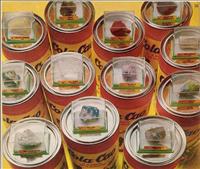
En 1973 la empresa Nutrexpa tuvo la genial idea de regalar con los botes de tamaño familiar de Cola-Cao una colección de minerales.
Los niños, niñas y adultos de la época pudieron descubrir como era la Fluorita, la Azurita, la Magnetita, la Galena, el Talco, el Oligusto, el Yeso Fibroso, Silex, Aragonito y así hasta un total de 12 minerales.
Éstos iban sobre la tapa del bote y metidos en cajitas trasparentes con el nombre del mineral. Si enviabas 10 pesetas en sellos de correos a Cola-Cao, te remitía gratuitamente un estuche para guardar toda la colección.
Los -Tesoros de la Tierra- fue una colección entrañable y un acierto comercial de Nutrexpa.
http://www.eselx.com/ficha.aspx?canal=teacuerdas&wv=100|101|3628