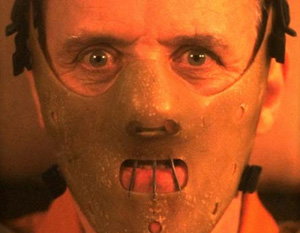
Anthony Hopkins en El silencio de los corderos

(Chapman/Chinn)
Well I’ve seen you before on that discotheque floor
You were driving me out of my mind
But I could have swore that I saw something more in your eyes
Although you were surrounded by beauty unbounded
Your glance was intended for me
And though I tried to hide it I found myself looking to see you
So then you took your chances, you made your advances
Your touch took my breath away
But when you said hello, are you ready to go
Well I had just one thing to say
If you can’t give me love honey, that aint enough
Let me go look for somebody else
If you can’t give me feelings with old fashioned meanings
You’re just in love with yourself
If you can’t give me love(Love)If you can’t give me love(Love)
If you can’t give me love(Love)If you can’t give me love(Love)
If you can’t give me love(Love)
Well you may be the king of this discotheque scene
But honey I aint looking for that
What I need is a man, not some so-called aristocrat
Oh if only you’d waited, just hesitated, or maybe just asked me to dance
But you really don’t know why I don’t want to go
And baby that’s why we don’t stand a chance
So if you can’t give me love honey, that aint enough
Let me go look for somebody else
If you can’t give me feelings with old fashioned meanings
You’re just in love with yourself
If you can’t give me love(Love)If you can’t give me love(Love)
If you can’t give me love(Love)If you can’t give me love(Love)
If you can’t give me love(Love)
Oh if you can’t give me love honey, that aint enough
Let me go look for somebody else
If you can’t give me feelings with old fashioned meanings
You’re just in love with yourself
If you can’t give me love honey, that aint enough
Let me go look for somebody else
If you can’t give me feelings with old fashioned meanings
You’re just in love with yourself
If you can’t give me love(Love)If you can’t give me love(Love)
If you can’t give me love(Love)If you can’t give me love(Love)
If you can’t give me love(Love)If you can’t give me love(Love)
If you can’t give me love(Love)If you can’t give me love(Love)
Give me love(Love)Give me love(Love)
Give me love(Love)Give me love(Love)
Give me love(Love)
Da-dum, da-da-da-da-da-da-da
Da-dum, da-dum
Da-da-da-da-da-da-da-da
Da-dum, Da-dum
Da-da-da-da-da-da-da-da
Why haven’t I told you
Oh, baby, I’ve told every little star
Just how sweet I think you are
Why haven’t I, I told you
Da-dum, da-da-da-da-da-da-da
I’ve told ripples in a brook
Made my heart an open book
Why haven’t I, I told you
Friends ask me "am I in love"
I always answer "yes"
Might as well confess
If the answers yes
Maybe, you may love me too
Oh, my darling, if you do
Why haven’t you told me
Da-dum, da-da-da-da-da-da-da
Da-dum, da-dum
Da-da-da-da-da-da-da-da
Friends ask me "am I in love"
I always answer "yes"
Might as well confess
If the answers yes
Maybe, you may love me too
Oh, my darling, if you do
Why haven’t you told me
Da-dum, da-da-da-da-da-da-da
Da-dum, da-dum
Da-da-da-da-da-da-da-da
Da-dum, da-dum
Da-da-da-da-da-da-da-da
Da-dum, da-dum
Linda Scott was a pop singer active in the early to mid 1960’s. She was born in Queens, New York as Linda Joy Sampson on June 1st 1945. Her biggest hit was the 1961 million-selling hit ’I’ve Told Every Little Star’. She went on to place 12 songs on the charts over the next 4 years, the last being ’Who’s Been Sleeping In My Bed,’ which was one of the first collaborations between the legendary writing team of Hal David and Burt Bacharach.
Linda Scott was still in high school when she auditioned for Arthur Godfrey’s radio show on CBS in 1959. After having won a place on the show, Linda and other young performers became regular guests on the show. During the show’s run the young singer came to the attention of Epic records and Linda made her recording debut (singing as Linda Sampson) with the single ’In-Between Teen’.
In 1961 she signed with the Canadian-American label, a label that had struck gold with the Santo & Johnny single ’Sleep Walk’. Though still in high school, the label changed her performing name to Linda Scott producing and releasing the hit ’I’ve Told Every Little Star’. The song was originally written by Oscar Hammerstein II and Jerome Kern and was first used in the 1932 production of ’Music In The Air’. That year Scott had a total of 3 top 20 hits. She also wrote some of her own music, unusual for the time, including ’Three Guesses’ which was the B side of ’I’ve Told Every Little Star’ The next year she recorded for both Canadian-American records and it’s sister label Congress records. She also appeared in ’Don’t Knock The Twist’ starring Chubby Checker singing Yessiree’. Though she released several more singles over the next 3 years they were less and less successful. Her last chart appearance was ’Who’s Been Sleeping In My Bed’ released in January 1964, the same month the Beatles made their first chart appearance.
In 1965 she became a cast member of the T.V. rock show ‘Where the Action is’ which she co-hosted with singer Steve Alaimo. Scott’s last recording, ’They Don’t Know You’, was released in 1968 on RCA records and Scott quit show business soon after to pursue studies in theology. She was an army medical laboratory technician for two years and later received a degree in Theology from Kingsway Christian College and Theological Seminary in Des Moines. The Complete Hits of Linda Scott was released by Bay area Eric records and “I’ve Told Every Little Star” was included in director David Lynch’s film “Mulholland Drive.”
http://www.encore4.net/livelyset/closeup/linda-scott/lindascott2.html
Dicitur Parrala esse ex Moguer,
alii dicunt esse natam in La Palma,
sed nemo potuit firmiter sapere
unde oriunda erat Trini La Parrala.
Alii dicebant quod si,
alii dicebant quod non,
et propter dicere magis
cecinit Parrala sic:
Quod si, quod si, quod si, quod si
quod multum placet Parrala vinus,
quod non, quod non, quod non,quod non
nec ardens aqua nec marrasquinus,
quod si, quod si, quod si, quod si,
si non est vinus cantus non est,
quod non, quod non, quod non, quod non,
quod solum bibit obliti causa.
Quis emit mihi mysterium,
adivinat, adivinat :
cujus causa patet, plora,
patet ploraque Parrala?
José Javier Etayo.
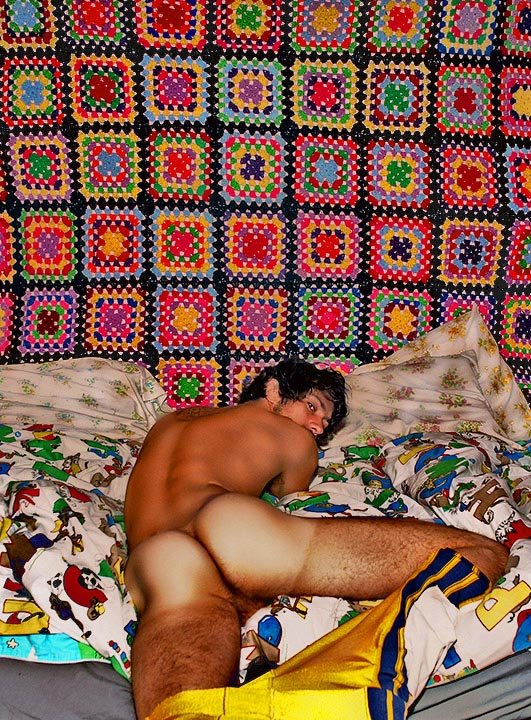
Wake up Maggie I think I got something to say to you
It’s late September and I really should be back at school
I know I keep you amused but I feel I’m being used
Oh Maggie I couldn’t have tried any more
You lured me away from home just to save you from being alone
You stole my heart and that’s what really hurt
The morning sun when it’s in your face really shows your age
But that don’t worry me none in my eyes you’re everything
I laughed at all of your jokes my love you didn’t need to coax
Oh, Maggie I couldn’t have tried any more
You lured me away from home, just to save you from being alone
You stole my soul and that’s a pain I can do without
All I needed was a friend to lend a guiding hand
But you turned into a lover and
mother what a lover, you wore me out
All you did was wreck my bed
and in the morning kick me in the head
Oh Maggie I couldn’t have tried anymore
You lured me away from home ’cause you didn’t want to be alone
You stole my heart I couldn’t leave you if I tried
I suppose I could collect my books and get on back to school
Or steal my daddy’s cue and make a living out of playing pool
Or find myself a rock and roll band that needs a helpin’ hand
Oh Maggie I wish I’d never seen your face
You made a first-class fool out of me
But I’m as blind as a fool can be
You stole my heart but I love you anyway
Maggie I wish I’d never seen your face
I’ll get on back home one of these days
This article is about the Rod Stewart song. For the original traditional Liverpool song as sung since the 1830s or earlier, see Maggie May (traditional song).
"Maggie May" is a song written by Rod Stewart and musician Martin Quittenton and recorded by Stewart with his band The Faces in 1971. It tells the story of a younger man becoming obsessed with an older woman and was written from Stewart’s own personal experiences.
The song was initially released in the United Kingdom as the B-side of the single "Reason to Believe", but DJs became more fond of the B-side and, after two weeks in the chart, the song was re-classified with "Maggie May" as the A-side. However, the single continued to be pressed with "Maggie May" designated the B-side.
In October 1971, the song went to number one in the UK, and simultaneously topped the charts in the United States; the album on which it appeared, Every Picture Tells a Story, achieved the same feat at the same time. To top the UK and U.S. singles and album charts simultaneously is a rare achievement which has been achieved by only a handful of acts other than Stewart, notably The Beatles, Simon and Garfunkel and, most recently, Beyoncé Knowles.
The song launched Stewart as a solo artist. While he has sold millions of records and had countless hits around the world, it is still "Maggie May" for which he arguably is best known. A famous live performance of the song on Top of the Pops saw the Faces joined onstage by DJ John Peel who pretended to play the mandolin. Stewart himself was bemused by the song’s success saying I still can’t see how the single is such a big hit. It has no melody. Plenty of character and nice chords, but no melody.
The song re-entered the UK charts in December 1976, but only reached thirty-one. No other act has released the song as a single, though both Blur and Wet Wet Wet have recorded versions of it, and Melissa Etheridge has performed it in concert as have The Pogues.
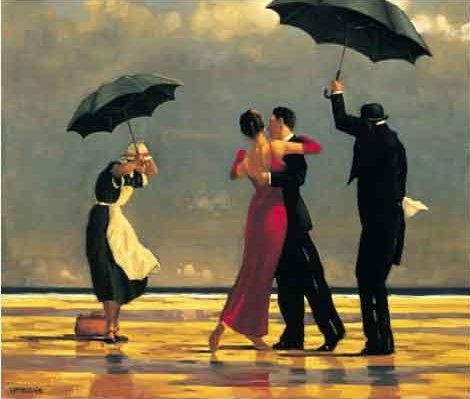
Jack Vettriano (born 17 November 1951 Fife) is a Scottish painter. Originally Jack Hoggan, he grew up in the industrial seaside town of Methil, Fife. He left school at 16 and became an apprentice mining engineer, but later took up painting as a hobby in his twenties. His earliest paintings were copies or pastiches of impressionist paintings (his first painting was a copy of Monet’s Poppy Fields).
Vettriano’s breakthrough year was 1988, when he felt ready to display his paintings in public and submitted two canvases for the Royal Scottish Academy annual show. Both paintings sold on the first day and Vettriano was approached by several galleries who wanted to sell his other work. The success and attention contributed to the breakdown of his first marriage and he moved to Edinburgh, changing his name to Vettriano, his mother’s maiden name.
Further successful exhibitions followed in Edinburgh, London, Hong Kong, Johannesburg, and New York. His paintings are reminiscent of the film noir genre, often with romantic or even pornographic themes.
Although his work is generally dismissed by art critics as being vulgar and devoid of imagination, he is one of the most commercially successful living artists. His original paintings now regularly fetch six figure prices, but he is thought to make more money from the sale of reproductions. According to The Guardian, he earns £500,000 a year in print royalties. Each year a new set of limited edition prints are published, and his most popular work, The Singing Butler, sells more posters and postcards than any other painting in the UK. On 21 April 2004 the original canvas of The Singing Butler sold at auction for £744,500 — in stark contrast to 1992 when Vettriano painted the picture and submitted it for inclusion in the Royal Academy summer show, only to be rejected.
In October 2005, it was ’discovered’that figures in some of Vettriano’s paintings, including The Singing Butler, were based on figures from an artists’ reference manual, The Illustrator’s Figure Reference Manual.[1] This revelation did little to tarnish Vettriano’s reputation,however, as he has never denied being self-taught. In his early years he didn’t have the financial resources to hire models. His talent lies in placing his figures in an unusual narrative context.
Vettriano has studios in Scotland and London. He is represented by the Portland Gallery, London and includes Jack Nicholson and Terence Conran amongst his collectors. In 2003 he was awarded the OBE.
[edit] See also
http://www.alisonjackson.com/
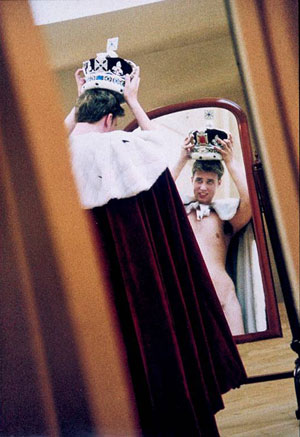
Alison Jackson (born 1960) is a English photographer. She hit the headlines in 2000 with her lookalike photographs of celebrities in compromising positions, and went on to win a BAFTA for BBC 2’s series Double Take
Contents
[hide]
* 1 Biography
* 2 Personal life
[edit] Biography
A BA (Hons) Fine Art Sculpture from the Chelsea College of Art as an adult student, was followed by an MA Fine Art Photography from The Royal College of Art, London.
Jackson became notorious in Britain during 1999 for producing black-and-white photographs that apparently showed Princess Diana and Dodi Al-Fayed with a mixed-race love child. Since the couple died without producing offspring the photographs were clearly impossible. They appeared convincing because Jackson had employed look-alike models to pose as Di and Dodi. The photos, part of her graduation series entitled Mental Images, were technically assured, beautifully composed and lit in a manner reminiscent of Old Master paintings of the Holy Family. Jackson was attracted to the subject of Diana because she was a national icon at the time of her death and by the fact that millions mourned her even though the majority only knew her through mass media images. It was also clear to Jackson that people fantasised about Diana’s love life.
Jackson was also the artist behind BBC Two’s series Double Take, for which she won a BAFTA [1]. Her next targets are rumoured to include George W Bush and: "Tony Blair. Like Sven, he’s on his way out."
[edit] Personal life
Her father was a wealthy eccentric who’s life as owner of his family’s Georgian estate near Portsmouth was shattered in 1972 when he received a government purchase order to run the new M23 through his parkland. "It devastated him. He was so upset that he arranged to have the house burned down" The Jackson family - Alison has an older brother - moved to an equally impressive Gloucestershire mansion, originally an 11th-century Gilbertine monastery, with its own chapel and network of secret tunnels.
Her childhood was spent largely at Croft House, a "miserable" Sussex boarding school "for complete dunces, where it was all about needlework and dressage". Sarah Ferguson was a pupil. Her eccecentric father died when she was a teenager.
Jackson is single and childless. She has a "relatively long-term" boyfriend called Anthony, a film producer. She lives in one of Chelsea’s most opulent streets, in a house which used to be Turner’s art studio. Jackson bought it as a derelict shell, and turned it into one big, sparse, starkly minimalist space decorated with a white chaise longue, a shelf of rare books, a Bang & Olufsen music system and the a grand piano. Guests who come to her dinner parties apparently include Lord Brocket and Notting Hill socialite Melissa Chassay
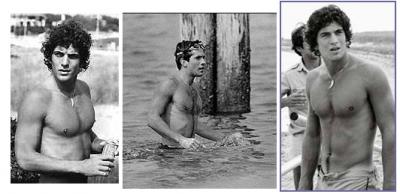
John Fitzgerald Kennedy Jr. (November 25, 1960 – July 16, 1999), often referred to as John F. Kennedy, Jr., JFK Jr., John Jr. or John-John was an American lawyer, journalist, socialite, and publisher. He was the son of President John F. Kennedy and Jacqueline Bouvier Kennedy and the younger brother of Caroline Kennedy.
Contents
[hide]
* 1 Early life
* 2 Education
* 3 Career
* 4 Death
* 5 See also
* 6 External links
[edit] Early life
Born less than a month after his father was elected to the presidency, John F. Kennedy, Jr. was in the public spotlight from infancy. He had lived for most of the first three years of his life in the White House and under the eye of the media who adored his antics. The nickname "John-John" came from a reporter mishearing his father calling him ("John" spoken twice in quick succession), and the name stuck. His father was assassinated on November 22, 1963, three days before Kennedy Jr.’s third birthday, and the son’s salute of his father’s flag-draped casket during the funeral procession on his third birthday became a heartbreaking and iconic image of the 1960s.
John Jr. grew up primarily on the Upper East Side of Manhattan in New York City. Even as a boy, he was often photographed and still referred to publicly as "John-John" although Kennedy family members themselves did not use the nickname [1]. After his father’s death, his mother was married to Greek shipping tycoon Aristotle Onassis from 1968 until Onassis’s death in 1975, when John was 14 years old. By most accounts, his stepfather did not play a particularly significant role in young John’s life. However, his real paternal figure from the ages of 3 to 8 was his uncle, Bobby Kennedy, who took Jackie, John, and Caroline under his wing following JFK’s death. This led to some jealousies and tensions between them and his own children, who felt neglected, and between Jackie and Ethel Kennedy, because Bobby also had the same affection for Jackie that her husband had.
[edit] Education
Although John F. Kennedy, Jr. attended Collegiate School in New York City for the first through tenth grades, he graduated high school from Phillips Academy. Subsequently, Kennedy matriculated at Brown University, graduating in 1983 with a bachelor’s degree in history. At Brown, Kennedy was a member of Phi Psi, an inactive chapter of the national Phi Kappa Psi Fraternity. In 1989, he earned a Juris Doctor (J.D.) degree from New York University School of Law. He failed the New York Bar exam twice before passing on the third try.
[edit] Career
He spoke at the 1988 Democratic National Convention in Atlanta, Georgia. He was a New York City assistant district attorney from 1989 to 1993. In 1995, he founded George, a glossy politics-as-lifestyle monthly which sometimes took editorial aim even at members of his own family. The magazine ceased publication shortly after Kennedy’s death.
Through the 1980s until his death, Kennedy was an often-seen and much-photographed personality in Manhattan. He married Carolyn Bessette on September 21, 1996 on Cumberland Island in Georgia. He dated Madonna and Daryl Hannah prior to his marriage.
[edit] Death
On July 16, 1999, Kennedy was killed along with his wife and his sister-in-law, Lauren Bessette, when the aircraft he was piloting, N9253N, a Piper Saratoga II HP, crashed on a hazy night into the Atlantic Ocean en route from Essex County Airport in West Caldwell, New Jersey, to Martha’s Vineyard, where the Kennedy family has a vacation house. Kennedy and his wife were traveling to the wedding of cousin Rory Kennedy, which was then postponed. Lauren was to have been dropped off at Martha’s Vineyard.
Kennedy was a relatively inexperienced pilot, with 310 hours of flight experience, including 55 hours of night flying and 36 hours in the high-performance Piper Saratoga. He had completed about half of an instrument training course but was not rated for flying in low visibility conditions. The National Transportation Safety Board investigation found no evidence of mechanical malfunction and determined that the probable cause was "the pilot’s failure to maintain control of the airplane during a descent over water at night, which was a result of spatial disorientation. Factors in the accident were haze, and the dark night." The report noted that spatial disorientation as a result of continued VFR flight into adverse weather conditions is a regular cause of fatal airplane accidents. According to literature found in most FAA approved flight training books, a pilot’s inability to see the horizon leads to spatial disorientation. The inner ear may give the pilot the impression that the plane is turning when it isn’t. It takes many hours of instrument training for a pilot to be able to fly in IFR conditions, conditions that most likely existed when Kennedy was flying on his route to Martha’s Vineyard. Over the water at night there are few lights and the lights that existed were most likely obscured by the haze.
Kyle Bailey, a pilot believed to have been the last person to see Kennedy alive at Essex County Airport, subsequently stated that he had cancelled his own intended journey to Martha’s Vineyard because the weather on the route was "a little too hazy." It also emerged that while Kennedy had made the journey from Essex County Airport to the Vineyard several times before, he had never made it without an instructor aboard or at night — factors which can make a flight challenging, especially for a relatively inexperienced, non-instrument-rated pilot. Kennedy’s flight instructor (CFI) stated that he offered to fly with Kennedy on the fatal journey but Kennedy replied that, "I want to do it alone." The instructor also stated that he was uncomfortable with Kennedy making a flight alone in a high-performance airplane at night, over open water and into haze, but did not insist that Kennedy remain on the ground.
During the memorial service on July 23, Kennedy’s uncle, Massachusetts Democratic Senator Edward Kennedy, said that, "We dared to think…that this John Kennedy would live to comb grey hair, with his beloved Carolyn by his side. But, like his father, he had every gift but length of years." [2] And of his nephew’s marriage, he invoked what had been said of his brother’s Presidency: both lasted 1,000 days. U.S. President Bill Clinton attended the service, and ordered that the flag at the White House be lowered to half-staff in honor of John F. Kennedy, Jr.
At President Clinton’s orders, warships of the U.S. Navy earlier assisted in the search for the downed plane, which was somewhat unusual. With the permission of Secretary of Defense William Cohen, Kennedy, his wife and sister-in-law were buried at sea off the Massachusetts coast after a ceremony aboard the destroyer USS Briscoe.
A large undisclosed payment was made to the Bessette family from the Kennedy family [3]. It was reported that this payment was made to avoid a possible high-profile lawsuit, since the accident was caused by human error.
Just as his father’s death is mired in conspiracy theory controversy, the story of John F. Kennedy, Jr.’s death has also drawn the attention of conspiracy theorists.
* El INE publica en su web un listado con los nombres más habituales desde los años 20
* Es posible consultar también el número de personas con cada apellido en cada provincia
MADRID.- María y Antonio. Estos son los nombres más habituales entre los españoles, seguidos por María del Carmen y José; Carmen y Manuel; Josefa y Francisco; e Isabel y Juan. El Instituto Nacional de Estadística (INE) ha publicado un apartado en su página web en el que analiza tantos los nombres como los apellidos más frecuentes en nuestro país.
También puede consultarse qué nombres eran más comunes en los años 20 o en la década de los 50, y cuáles son las preferencias de los nuevos padres para sus bebés: desde el año 2000, Alejandro y María. Este nombre repite como el nombre más común y el más elegido aún ahora.
De este modo, el nombre de Alejandro desbanca al de David como nombre más frecuente en los recién nacidos varones desde el año 2000, ya que éste fue el más utilizado desde la década de los 70. En los 50 y los 60 el nombre más habitual en los niños recién nacidos fue el de Antonio y con anterioridad el de José, el más común en los nacidos hasta 1940.
En las mujeres, María se confirma como el nombre preferido por los españoles, ya que desde 1990 ha sido el más utilizado para las niñas recién nacidas, después de que en los años 80 fuera el de Lucía. No obstante, el nombre de María o su compuesto María Carmen fue el más frecuente hasta esa fecha, siendo éste último el más común en las nacidas entre los 70 y los 40.
María, omnipresente
De hecho, esta utilización del nombre de María hace que se confirme como el nombre más frecuente entre los residentes en España en la actualidad, ya que 285 de cada mil mujeres tienen dicho nombre, tanto simple (31,5 de cada mil) como compuesto, mientras que 15 de cada mil hombres también tienen María de segundo nombre.
El ranking de nombres de mujer más frecuentes lo completan María Carmen (31,5 de cada mil mujeres), Carmen (22,5), Josefa (16,9), Isabel (14,5),María Dolores (12,8), Ana María (12,6) y María Pilar.
Sin embargo, en la lista de los 10 nombres de mujer más utilizados en los nacimientos a partir del año 2000 después de María (42,5) aparecen otros nombres como Lucía (33,7), Paula (31,5), Laura (27,6), Andrea (23,1), Marta (23,1), Alba (21,5), Sara (17,2), Ana (16,2) o Nerea (14,4).
En lo referente a los hombres, el nombre más frecuente entre los residentes actualmente en España es el de Antonio, ya que 37,9 de cada mil incluyen dicho nombre sus documentos. El resto de nombres más comunes son José (36,5), Manuel (32,4), Francisco (28,8), Juan (19,8), David (14,6), José Antonio (14,6), José Luis (14,3), Jesús (13,9) y Javier (12,7).
Sin embargo, y atendiendo a los nacimientos desde el año 2000, se mantiene la preferencia de nombres más comunes, como David (25,7 de cada mil recién nacidos) o Javier (21,5), pero destaca la aparición de otros nombres como Daniel (26 de cada mil), Pablo (25,5), Adrián (21,8), Álvaro (19,6), Sergio (17,2), Carlos (16,1) o Iván (13,5). También se sitúan entre los nombres más utilizados los catalanes Marc (8,8) y Pau (5,4), o el vasco Iker (5,6).
De hecho, entre los nombres más habituales en los recién nacidos a partir del año 2000 en el País Vasco destacan muchos de origen vasco como Mikel, Jon, Unai, Ander, Asier o Aitor, mientras que en Cataluña hay preferencia por nombres catalanes, tales como Pol, Arnau, Jordi, Gerard, Roger o Albert.
Los García, la ’familia’ más extensa
Por otra parte, los García son la ’familia’ más extensa. Ese apellido es el más frecuente en los ficheros específicos extraídos de la base padronal del INE, ya que 33,2 de cada mil residentes en España tienen dicho apellido y es el más frecuente en 31 provincias.
El resto de apellidos más frecuentes son González (20,8), Fernández (20,8), Rodríguez (20,7), López (19,6), Martínez (18,7), Sánchez (18,3), Pérez (17,5), Martín (11,1) y Gómez (11), que asimismo se reparten los primeros puestos del ranking en cada provincia. En este aspecto destacan las ciudades de Ceuta y Melilla, donde el apellido más frecuente de los residentes es Mohamed (86 y 81 de cada mil, respectivamente).
En lo que respecta a los extranjeros que viven en España, el INE hace ver que María es el nombre más frecuente también en las mujeres de nacionalidad rumana, belga, griega o italiana, mientras que en los hombres los más habituales son Ioan en los rumanos, Ivan en los búlgaros, Vladimir en los rusos o Volodymir en los ucranianos.
En cuanto a los ciudadanos procedentes de América Latina, Juan Carlos es el más común en ecuatorianos, colombianos, bolivianos o argentinos, mientras que en las mujeres, destacan Altagracia en las dominicanas, Ana María en las chilenas y peruanas, o María Fernanda en las ecuatorianas.
Por otro lado, Mamadou es el nombre más frecuente en los ciudadanos varones procedentes de Mali, Senegal y Guinea, siendo Mohamed el más común en los marroquíes, egipcios o argelinos.
http://www.charliesangels.com/
Genre Action adventure
Running time 50 minutes
Creator(s) Ivan Goff
Ben Roberts
Starring Kate Jackson
Farrah Fawcett
Jaclyn Smith
Cheryl Ladd
Shelley Hack
Tanya Roberts
David Doyle
John Forsythe
Country of origin Flag of United States United States
Original channel ABC
Original run September 22, 1976–June 24, 1981
No. of episodes 115
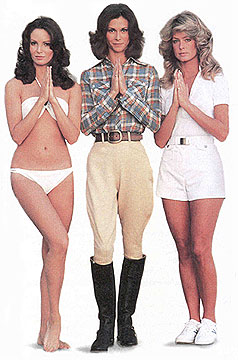
Charlie’s Angels was a television series that broadcast on the ABC Television Network from 1976 to 1981, about three women who work for a fictional private investigation agency, the Charles Townsend Agency. Their boss, Charlie (voiced by John Forsythe), was rarely seen and is never seen full face - in some episodes he is shown from the rear only (where the viewer only sees the back of his head and his arms) and on the series finale where he appears in surgeon’s mask and outfit. He only ever contacted the "angels" by telephone, addressing them via a speakerphone on the office’s desk.
The three original "angels" were Sabrina Duncan (Kate Jackson), Jill Munroe (Farrah Fawcett-Majors) and Kelly Garrett (Jaclyn Smith). Later, when a character left (because the actress went on to other projects, etc) another "angel" was brought on to keep the number at three. Later angels were Jill’s little sister Kris Munroe (Cheryl Ladd), Tiffany Welles (Shelley Hack), and Julie Rogers (Tanya Roberts). Jaclyn Smith was the longest serving TV angel, remaining with the show for its entire five season run. Another major character throughout the series was Charlie’s assistant, John Bosley (David Doyle).
The show’s premise focused Charlie assigning the ’angels’ to a new situation each episode, where they would go undercover in order to investigate ’from the inside’. Their undercover characters often had to feign not knowing each other in the situation, until their cover was inevitably blown. The undercover aspect of the show created much of the plot interest and tension. (The show got permission to use the Alan O’Day hit song at the time, ’Undercover Angel’, and he subsequently re-recorded a version just for the show.) Under their assumed identities, the ’angels’ used a combination of sexual wiles and knowledge learned for the situation in which they were being placed.
The show became known as "T&A T.V." (or "Tits and Ass television"), because the angels would often be seen scantily or provocatively clad, (generally as part of their undercover character -- e.g., rollergirl, beauty pageant contestant, maid, female prisoner), to showcase the figures and/or sexuality of the actresses. Farrah Fawcett-Majors once attributed the show’s success to this fact, quoted as saying "When the show was number three, I figured it was our acting. When it got to be number one, I decided it could only be because none of us wears a bra.".
The original angels; (left to right) Jaclyn Smith, Farrah Fawcett and Kate Jackson
Enlarge
The original angels; (left to right) Jaclyn Smith, Farrah Fawcett and Kate Jackson
Contents
[hide]
* 1 Movies
* 2 Video games
* 3 Pop Culture Impact
* 4 Other collectible items
* 5 Comics
* 6 List of Known Angels
o 6.1 During run of TV series
o 6.2 In between TV series and movies
o 6.3 During Movies
* 7 Notes and references
* 8 External links
[edit] Movies
The television series inspired two feature films from production company Flower Films: Charlie’s Angels (2000) and Charlie’s Angels: Full Throttle (2003). Each was directed by McG and starred Cameron Diaz, Drew Barrymore, and Lucy Liu as the three angels, with John Forsythe returning to voice Charlie. Bosley was played in the first film by Bill Murray, while the second film cast Bernie Mac as Jimmy Bosley, John’s adoptive-brother.
The second movie had more nods to the TV series than the first movie in the series did, perhaps due to complaints from fans of the TV series. Whereas most movie remakes of 1970s TV shows, like Starsky and Hutch, are actually remakes, the Charlie’s Angels films are set in a different time. The mythology goes that whenever an Angel leaves, she is replaced so there are always three (seen in the TV show). Liu, Barrymore and Diaz’s characters are not based on the Angels in the show, but are their "successors". To prove this fact, Demi Moore’s character, who is a ’fallen’ Angel, quotes; "Back in my day - we used guns", which refers to the lack of martial arts in the TV series, while it is the preferred form of combat in the films. In the TV series, the Angels were more police-like, generally using guns. Physical struggles, were, however, common. In fact, the silhouette logo of the TV series does show one angel with her hands in a karate-like pose (and the other two with a gun and a walkie-talkie). The karate pose is often included when the show is being spoofed. The martial arts theme in the movies can be seen, in a way, as based on the original TV logo.
Also, Jaclyn Smith reprised her Kelly Garrett role from the TV series, who Dylan (Barrymore) meets in a Mexican cafe when she decides to leave the Angels. Kelly persuades her to rejoin the Angels with an inspiring speech. This reinforces the fact that there were not just three Angels (in fact in the TV series the viewer sees six different Angels), but there have always been three Angels at any one time.
In 2004, a television movie entitled Behind the Camera: The Unauthorized Story of Charlie’s Angels aired on NBC. It depicted the true story of what happened during the first season of the TV show.
In 2006, all three original Angels appeared together on-stage at the 2006 Emmy Awards, in a retrospective tribute to Aaron Spelling.
[edit] Video games
In July 2003, three Charlie’s Angels games were released on three different gaming platforms: Nintendo GameCube, PlayStation 2, and the mobile phone. The versions released on both the GameCube and PlayStation 2 were virtually the same, each given the same title: Charlie’s Angels. The version released for the mobile phone was fundamentally toned down to fit the technical restrictions of the platform, and was titled Charlie’s Angels: Road Cyclone.
Despite the critical success of both the TV show and the movies, the video games, aside from the mobile phone version, were a debacle. According to Game Rankings, the GameCube version is the worst reviewed video game of all time (an average of 23%, with Metacritic garnering the same results). Although the PlayStation 2 version didn’t garner enough reviews to be officially listed, this version is virtually the same as the GameCube version. The mobile phone version averaged a respectable 79%.
[edit] Pop Culture Impact
The first season of Charlie’s Angels caused an explosion of fan hysteria and press coverage that was unheard of in the mid-1970s. It was even highlighted as a cover story in "Time" magazine which analyzed the impact of the show on popular culture.
[edit] Other collectible items
The show sold many items during its run. These included dolls, (two versions), games, trading cards, notebooks, and even record albums.
[edit] Comics
A British comic strip version was produced, written by Angus P. Allan and printed in TV comic Look-In.
[edit] List of Known Angels
[edit] During run of TV series
* Sabrina Duncan (1976-1979), played by Kate Jackson
* Kelly Garrett (1976-1981), played by Jaclyn Smith
* Jill Munroe (1976-1977), played by Farrah Fawcett-Majors
* Kris Munroe (1977-1981), played by Cheryl Ladd
* Tiffany Welles (1979-1980), played by Shelley Hack
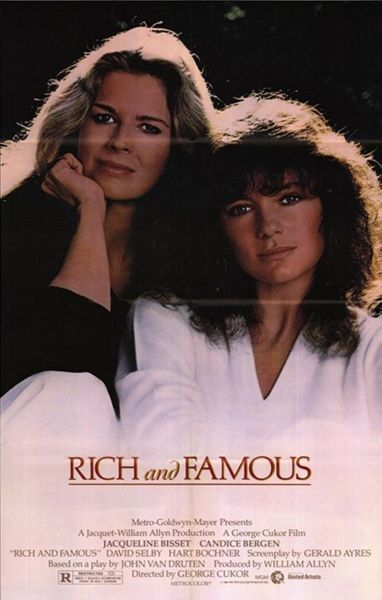
Rich And Famous is a 1981 comedy drama film made by Jaquet and Metro-Goldwyn-Mayer. It is a remake of the 1943 Warner Bros film Old Acquaintance starring Bette Davis and Miriam Hopkins.
The film was directed by George Cukor and produced by William Allyn and Jacqueline Bisset, from a screenplay by Gerald Ayres based on the play Old Acquaintance (1941) by John Van Druten. The music score was by Georges Delerue and the cinematography by Donald Peterman.
The film stars Jacqueline Bisset, Candice Bergen, David Selby, Hart Bochner. Also featured were Matt Lattanzi, Meg Ryan and Nina Foch.
Plot
Spoiler warning: Plot and/or ending details follow.
Two women find their friendship tested when one rises from obscurity to success: Liz Hamilton (Jacqueline Bisset) a young woman with literary ambitions who writes a critically acclaimed book soon after leaving college and Merry Noel Blake ((Candice Bergen), an all-American blond beauty from Atlanta who desires nothing more than a husband, a child and a life of domesticity. They are close friends who met while they were freshmen at Smith College in the 1950s. Liz has become a highly respected novelist, while Merry wed Doug Blake (David Selby), raised a family and lives in a house on the beach at Malibu. While Merry is happy, she can’t help but envy Liz for her glamorous career as an author. Merry decides to write a novel of her own, and with Liz’s help, the book, A House by the Sea soon finds a publisher and becomes a huge best-seller and Merry’s fame and wealth soon outstrip that of Liz, leading to jealousy between the old friends and problems in Merry’s marriage.
[edit] Cast
* Jacqueline Bisset - Liz Hamilton
* Candice Bergen - Merry Noel Blake
* Meg Ryan - Debby at Age 18
* David Selby - Doug Blake
* Hart Bochner - Chris Adams
* Steven Hill - Jules Levi
* Michael Brandon - Max
* Matt Lattanzi - Jim, the Boy
* Daniel Faraldo - Ginger Trinidad
* Frank de Felitta
* William G. Schilling - Waldorf Doorman
* Allan Warnick - Desk Clerk
* Damion Sheller - Max’s Son
* John Perkins - Limo Driver
* Oliver Hailey - Literary Party Guest
* Fay Kanin - Prof. Fields
* Charlotte Moore - Clerk in Cartier
* Randal Kleiser - Literary Party Guest
* Gavin Lambert - Literary Party Guest
* Roger Vadim - Malibu Party Guest
* Paul Morrissey - Malibu Party Guest
* Alan Berliner - Photographer
* Nicole Eggert - Debby at 8
* Nina Foch - Rich and Famous People
* Herb Graham - Waiter
* Frances Bergen - Literary Party Guest
* Dick Cavett - Himself
* Ray Bradbury - Literary Party Guest
* Ann Risley - Max’s Wife
* Pola Miller - Malibu Party Guest
* Kres Mersky - Judy Heller
* Cloyce Morrow - Martha Antilles
* Merv Griffin - Himself
* Marsha Hunt - Herself
* Joe Maross - Martin Fornam
* Christopher Isherwood - Malibu Party Guest
[edit] Notes
* Robert Mulligan was the original director, but he had to bow out because of previous engagements and was replaced by George Cukor.
* Rich and Famous was the final picture directed by George Cukor.
* The party sequences include such literary and cinematic notables as Christopher Isherwood, Ray Bradbury, Paul Morrissey, and Roger Vadim.
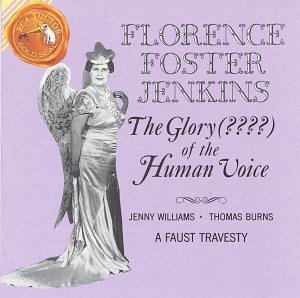
Florence Foster Jenkins (1868–November 26, 1944) was an American soprano who became famous for her complete lack of singing ability.
Biography
Born Florence Foster in 1868 in Wilkes-Barre, Pennsylvania, Jenkins received music lessons as a child, and expressed a desire to go abroad to study music. Her wealthy father refused to pay the bill, so she eloped to Philadelphia with Frank Thornton Jenkins, a medical doctor, who became her husband (the two divorced in 1902). She earned a living there as a teacher and pianist. Upon her father’s death in 1909, Jenkins inherited a sum of money which allowed her to take up the singing career that had been discouraged by her parents and former husband. She became involved in the musical life of Philadelphia, founding and funding the Verdi Club, took singing lessons, and began to give recitals, her first in 1912. Her mother’s death in 1928 when Florence was 60 gave her additional freedom and resources to pursue singing.
From her recordings, it is apparent that Jenkins had little sense of pitch and rhythm and was barely capable of sustaining a note. Her accompanist can be heard making adjustments to compensate for her tempo variations and rhythmic mistakes. Nonetheless, she became tremendously popular in her unconventional way. Her audiences apparently loved her for the amusement she provided rather than her musical ability. Critics often described her work in a backhanded way that may have served to pique public curiosity.
Despite her patent lack of ability, Jenkins was firmly convinced of her greatness. She compared herself favourably to the renowned sopranos Frieda Hempel and Luisa Tetrazzini, and dismissed the laughter which often came from the audience during her performances as coming from her rivals consumed by "professional jealousy." She was aware of her critics, however, saying "People may say I can’t sing, but no one can ever say I didn’t sing."
The music Jenkins tackled in her recitals was a mixture of the standard operatic repertoire by the likes of Wolfgang Amadeus Mozart, Giuseppe Verdi and Richard Strauss (all of them well beyond her technical ability), Lieder (including works by Johannes Brahms and Joaquín Valverde’s "Clavelitos," a favourite encore), and songs composed by herself or her accompanist, Mr. Cosmé McMoon (who was in reality the famous and talented accompanist Edwin McArthur). Jenkins often wore elaborate costumes that she designed herself, sometimes appearing in wings and tinsel, and, for "Clavelitos," throwing flowers into the audience while fluttering a fan and sporting more flowers in her hair.
After a taxicab crash in 1943 she found she could sing "a higher F than ever before." Instead of a lawsuit against the taxicab company, she sent the driver a box of expensive cigars.
In spite of public demand for more appearances, Jenkins restricted her rare performances to a few favorite venues, and her annual recital at the Ritz-Carlton ballroom in New York City. Attendance of her recitals was always limited to her loyal clubwomen and a select few others - she handled distribution of the coveted tickets herself. At the age of 76, Jenkins finally yielded to public demand and performed at Carnegie Hall on October 25, 1944. So anticipated was the performance that tickets for the event sold out weeks in advance. Jenkins died a month later.
There have been claims that Jenkins’s entire 32-year career was an elaborate joke on the public, which seems to be in contradiction with another claim that her death after the Carnegie Hall performance was a result of derision by her critics. However, there is little evidence for either claim. All indications are that Florence Foster Jenkins died with the same happy, confident sense of fulfillment that pervaded her entire artistic life.
Jenkins recorded nine arias on five 78-rpm records, which have been reissued on three CDs. The Muse Surmounted: Florence Foster Jenkins and Eleven of Her Rivals (Homophone Records) contains only one Jenkins’ performance, Valse Caressante, for voice, flute & piano, but it includes an interview with the composer, who was also her accompanist, Mr. Cosmé McMoon. The Glory (????) of the Human Voice (RCA Victor) contains the other 8 arias, all accompanied by Mr. McMoon. Murder on the High C’s (Naxos) contains all 9 arias plus performances by others, but it lacks the interview with McMoon. In 2001, a play about Jenkins by Chris Ballance had a run at the Edinburgh Fringe. Another play about Jenkins’ life, Souvenir, opened on Broadway in November 2005, and starred Judy Kaye as Jenkins. Meanwhile, a new play about Jenkins, Glorious by Peter Quilter, opened in September 2005 in England. It has been said to provide a wonderful vehicle for Maureen Lipman who in the words of the New York Times reviewer "ably supported by William Oxborrow, Janie Booth et al, provides a thoroughly entertaining evening complete with much double entendre, theatrical in jokes to say nothing of some terrible singing! Lipman, as always, knows exactly how to create a character both funny and sad and vulnerable at the same time."
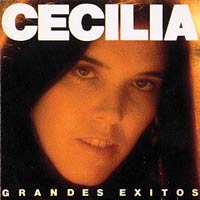
Evangelina Sobredo Galanes, "Cecilia", (Madrid , 11 de octubre de 1948 - Benavente, 2 de agosto de 1976), cantautora española.
Como hija de diplomáticos españoles tuvo una infancia itinerante (Inglaterra, EE.UU., Portugal, Jordania) y una educación cosmopolita: aprendió a hablar en inglés antes que en castellano. Por ello sus primeras letras fueron tanto en inglés como en español. Finalmente se decantó por este último idioma. Se educó con una monja americana que la animaba a tocar la guitarra y a cantar en todas las fiestas de fin de curso. De regreso a España, tras licenciarse en Derecho, decidió dedicarse en serio a la música y a componer sus propias letras, que poseen una calidad poética y literaria notable, muy por encima de lo habitual en su tiempo, y se adscriben a corrientes existencialistas y a la canción de protesta feminista.
Junto a Nacho Saez de Tejada (Nuestro Pequeño Mundo) y Julio Seijas ("La Compañía"), Cecilia grabó en 1970 un sencillo, Expresión, cantado en inglés, y con aire bluessy-folk, y, aunque Seijas siguió siendo colaborador, el grupo se disolvió. Un año después, Cecilia grabó su primer sencillo en solitario: Mañana/Reuníos, dos temas hasta el momento inéditos en cd; el segundo es como un ruego para que se reunieran los entonces disueltos The Beatles. Aunque no supuso un gran éxito, el disco representó entonces una novedad en un panorama dominado por cantautores de influencia francesa como Mari Trini, Joan Manuel Serrat o Luis Eduardo Aute.
En 1972, la multinacional "CBS", hoy "Sony", la contrató y grabó su primer LP, por título Cecilia, en homenaje a la canción homónima de Simon y Garfunkel. Una canción social de este disco, "Dama, Dama", fue un exitazo, así como las existenciales "Nada de nada", "Mi gata Luna", "Fui" o "Señor y dueño" (que según sus propias palabras, era su canción favorita).
Al año siguiente, 1973, apareció su segundo LP, titulado Cecilia 2" con una característica foto de Ontañón en la portada; en este álbum hay recuerdos ("Cuando yo era pequeña", "Mi ciudad"), prospecciones al futuro ("Me quedaré soltera", tema fuerte para la época, y "Si no fuera porque..."), pasado colectivo ("Un millón de sueños", alusión a la Guerra Civil) y un amor existencial, elegíaco y triste muy característico de Cecila ("Canción de amor", "Me iré de aquí"). Solo "Andar", tema de apertura del disco, escapa de esa tristeza y aparece lleno de ganas de vivir. Fue también un éxito, aunque no tan resonante como el anterior, habida cuenta de que los elepés eran por entonces mucho más caros que los sencillos y todavía se estaba generalizando su uso.
Su tercer álbum fue el mayor éxito de su corta y fulminante carrera, Un ramito de violetas, por la canción que tuvo más éxito del LP y por la que se le suele recordar injustamente, ya que muchos de sus otros éxitos son también notables. Según su hermana Teresa, antes de ser canción fue un cuento. Junto a esta pieza destacan canciones como "Mi querida España", "Decir adiós" o "Sevilla".
En 1975, Televisión Española decidió que representara a España en el Festival de la OTI, y la artista aceptó a regañadientes, puesto que no le gustaban los festivales, con la canción "Amor de medianoche", compuesta por ella misma y Juan Carlos Calderón; el tema consiguió el segundo puesto. Grabó entonces un LP recopilatorio con el título de esa canción, que fue su último trabajo antes de perder la vida en un accidente de tráfico contra una carreta de bueyes, incidente que dejó desolado a todo el país, pues la cantante poseía un carisma insólito y una popularidad increíble. Sin embargo, aún llegó a editar un single en vida en 1976 con "Tu y yo" y en la segunda cara el tema "Una guerra", alusión a la Guerra Civil que aparece en otras letras suyas. "Tu y yo" nunca se reeditó en las innumerables recopilaciones posteriores. Cuando murió trabajaba en un proyecto sobre textos de Ramón María del Valle-Inclán. Está enterrada en el cementerio de La Almudena, en Madrid.
En septiembre de 1976, un mes tras su fallecimiento, salió el single póstumo que llevaba por título en la cara A "El viaje" y en la cara B, "Lluvia". A los siete años de su óbito su casa de discos editó un álbum con 12 canciones inéditas recopiladas desde maquetas y arregladas por Juan Carlos Calderón. En 1991 la llegada del sonido digital posibilitó la remasterización de una recopilación y en 1996 se editó un doble álbum con dúos de Cecilia con cantantes como Mercedes Corisco que apenas había nacido cuando murió, con Miguel Bosé, Ana Belén, Manolo Tena, Julio Iglesias etc... Además se logró recuperar "Desde que tu te has ido", una canción que dio título a esta colección de dúos y que fue reconstruida y digitalizada desde una maqueta que grabó Cecilia como prueba sólo con su voz y guitarra; se debe la reconstrucción al músico Juan Carlos Calderón.
Como intérprete usó unas veces de una voz frágil de una niña pequeña y otras de una voz firme e indomesticable. En sus versos refleja, con una gran tensión lírica e ironía, una España gris que empezaba a dejar de ser la España negra y rural del Franquismo.
Murió con 27 años en un accidente de tráfico tras chocar contra una carreta de bueyes.
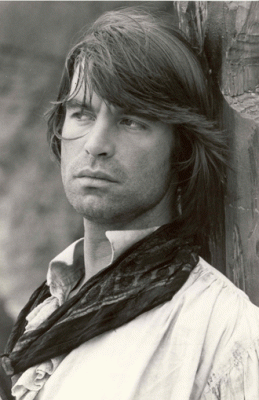
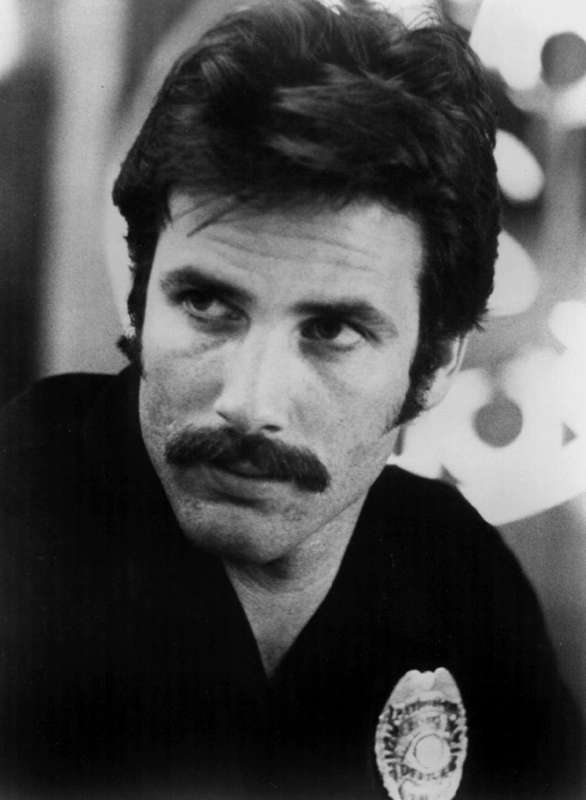
http://www.hartbochner.com/
Hart Bochner
graduated from UC San Diego in 1978 with a BA in English Literature. Initially interested in directing, he was discovered at an AFI Open House in 1975 by the wife of Franklin Schaffner, and subsequently cast in Schaffner’s film ‘Islands in the Stream’, playing George C. Scott’s son. He went on to formal training as an actor with Peggy Feury at the Loft Studio from 1979 to 1985.
After years as a successful actor, Hart made the transition into directing with his short feature ‘The Buzzz’ starring Jon Lovitz. The film led to a deal with 20th Century Fox to direct the cult film, ‘PCU’.
He currently sits on the Leadership Council of the DGA’s PAC Committee, as well as the Board of Directors of the Environmental Media Association. Hart divides his time between homes in Los Angeles and France.
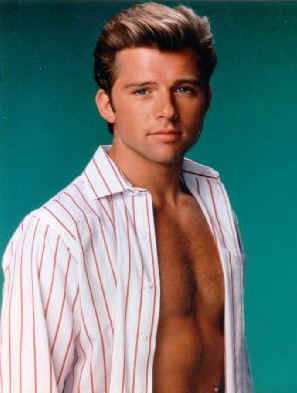
http://seventh-seal.com/2themax/gallery.htm
Maxwell Caulfield (born on November 23, 1959 in Glasgow, Scotland) is a Scottish-American actor.
His American stepfather, a Marine instructor at Parris Island, kicked him out of the house at the age of 15.
He moved eventually to the U.S., got his green card and found work as an exotic dancer before making his acting debut off-Broadway in the title role of Joe Orton’s Entertaining Mr. Sloane as a drifter.
He went on to star in the musical film Grease 2 (1982) opposite Michelle Pfeiffer.
At 21, he married Juliet Mills (18 years his senior) in 1980, and became stepfather to her daughter, Melissa Miklenda (who now goes by Melissa Caulfield).
His other appearances include a role in Judith Krantz’s Till We Meet Again, and in the movie Gettysburg. In addition to his role in Grease 2, he is perhaps best known for the role of Miles Colby on the successful Dynasty spin-off The Colbys.
Main title caption from Dynasty.
Enlarge
Main title caption from Dynasty.
He also appeared in the first episode of Beverly Hills 90210 as an older man interested in Shannen Doherty until he finds out how young she is. He appeared in a humorous role as "Rex Manning", a spoiled has-been rock star, in the film Empire Records (1995).
He made his Broadway debut in J. B. Priestley’s An Inspector Calls opposite Sian Phillips.
He voiced the character of Alistair Smythe in Spider-Man: The Animated Series from 1994-1998 and was the voice of James Bond in the videogame Nightfire.
He returned to the United Kingdom in 2004 to appear as Dr Jim Brodie in the highly-rated BBC medical drama Casualty.
Maxwell is currently performing the lead in ’Tryst’ off-Broadway.
He and Mills reside in Santa Barbara, California.
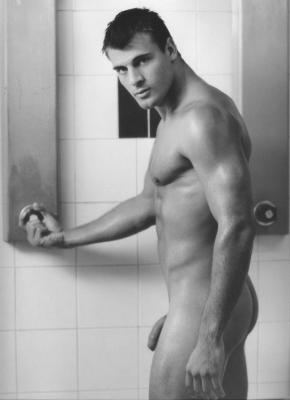
http://www.fred-deltour.com/
This is Mister France
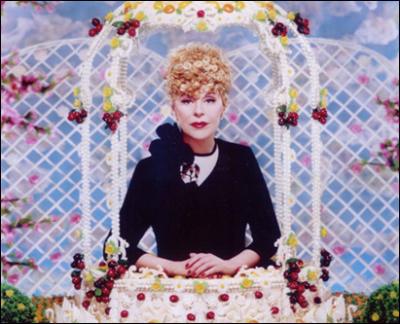
Ce couple d’artistes, qui vivent et travaillent ensemble depuis 1976, s’est, au fil des dernières décennies, construit, approprié et façonné sur la scène artistique une place à part, une niche spécifique, abolissant les frontières arbitraires et archaïques entre genres, thèmes et sources iconographiques. Un style très particulier devenu très "mode".
Après le succès retentissant de leurs expositions monographiques de Paris (Maison Européenne de la
photographie), Glasgow (Museum of Modern Art), Tokyo (Ginza Art Space), Turku (Turun Taide Museum), New York (New Museum of Contemporary Art), San Francisco (Yerba Buena Arts Center for the Arts) et plus récemment à Vienne (Kunsthaus Wien), c’est au Botanique qu’a été présentée, pour la première fois en Belgique, une rétrospective inédite de leur travail.
Une sélection d’œuvres inédites ou méconnues ont été présentées aux côtés de réalisations très célèbres et, en avant-première, de quelques-unes de leurs créations les plus récentes (2002). Un album embrassant l’ensemble de leur production et retraçant son évolution depuis 1976, a été réalisé à l’occasion de l’exposition.
Reconnaissable d’emblée, leur œuvre est unique à plus d’un titre. Sa singularité repose d’abord sur la spécificité d’un processus créatif, adoptant un dispositif à la fois manuel et mécanique, complexe et toujours soigneusement pensé. Avec une complémentarité rarement atteinte dans un duo d’artistes, Pierre et Gilles (inter)agissent à chaque étape de la conception et de la réalisation de leurs oeuvres.
Une technique originale
Commençant par réaliser des dessins préparatoires, ils conçoivent ensuite la mise en scène théâtrale de leur décor au gré d’objets et accessoires chinés ou spécialement fabriqués pour l’occasion. Pierre photographie alors la scène, en un unique tirage que, loin de toute manipulation digitale, Gilles retravaille ensuite par couches successives de glacis et de couches picturales, au pinceau et à l’aérographe, mutilant ainsi la possibilité de reproductibilité à l’infini de l’œuvre photographique. S’impose enfin le choix et la conception d’un encadrement spécifique, prolongement essentiel de la photographie peinte.
De cette intime imbrication des techniques photographique et picturale, leur permettant véritablement de s’exprimer l’un avec l’autre, jaillit une œuvre unique, hybride et syncrétique, abolissant les oppositions traditionnelles entre supports d’expression artistiques. Se dépouillant d’une partie de ses vertus de représentation mimétique, la photographie gagne en idéalisation, assumant les qualités affectives et sensorielles de la peinture, tandis que cette dernière tend vers un surcroît de vérité objective.
Mais ce syncrétisme trouve également sa transposition dans la façon remarquable dont Pierre et Gilles, en véritables iconophages, brassent et s’approprient une multitude de genres (du portrait à l’imagerie religieuse en passant par l’affiche publicitaire) et de thématiques, au croisement de traditions et de sources iconographiques diverses.
Le profane et le sacré, le banal, l’anodin et le consacré se côtoient dans un univers féerique, nourri de rencontres et de voyages, de souvenirs et de rêves et exaltant le regard étonné et admiratif de l’enfant qui se tapit au fond de tout un chacun.
Qu’il s’agisse de célébrités (Lio, Nina Hagen, Serge Gainsboug, Etienne Daho, Arielle Dombasle …) ou d’inconnus, le modèle, souvent abordé dans une frontalité iconique, se retrouve au centre du dispositif de Pierre et Gilles.
Métamorphosé en saint, voyou, marin, divinité ou encore en héros romanesque, il s’intègre à un univers bigarré où références à la publicité, à l’imagerie télévisuelle, à la tradition picturale, à la mythologie classique, à l’iconographie chrétienne se nourrissent l’une l’autre.
Flirtant délibérément, mais en les dépassant, avec l’imagerie "pop", l’univers de la mode et du "glamour", l’œuvre de Pierre et Gilles fait fi des distinctions traditionnelles entre Beau et Laid, Bien et Mal, culture populaire et tradition classique. Il en résulte une œuvre résolument originale et personnelle, dont le but ultime tend toujours à la recréation d’un idéal iconique et affectif.
Dans cette résolution de tout antagonisme dialectique, Pierre et Gilles opèrent donc un travail déstabilisant et subversif, sapant les hiérarchies et catégorisations convenues et mettant au défi les normes de bienséance, qu’elles soient esthétiques ou moralisatrices.
Reflet intime de leur façon de vivre, leur art livre sans doute la clef de sa popularité dans cette authenticité et cette faculté qu’il a d’exprimer l’ambivalence de notre réalité et de l’univers mental bigarré, mélangé de notre société contemporaine.