Blogia

ladymarjorie

Un señor sin dote puede estar dotado

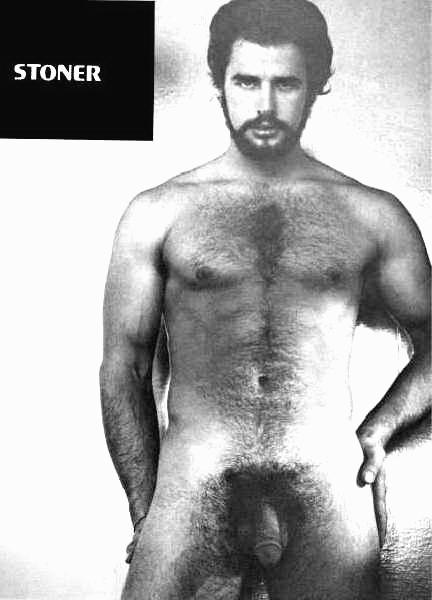
Question angoissante pour les hommes? Sujet de curiosité pour ces dames! Quelle "doit" être la taille d'un pénis? Au repos et au garde-à-vous? Tout en sachant que ce qui importe, ce n'est pas seulement l'outil, c'est l'ouvrier...

Un sujet sans doute préoccupant puisque l'inquiétude masculine se dévoile sur de nombreux forums et une part importante des "spams" sont consacrés à la "chose". Ces courriers électroniques comme certains sites proposent par exemple, "en exclusivité des exercices permettant le développement naturel du pénis (note : jusqu'à 6 cm en un an) et des testicules". Certaines méthodes se veulent naturelles, sans "pompes ou poids ou autres gadgets".

Mais existe-t-il une norme? Oui dans le sens où celle-ci n'est qu'une moyenne. Non, dans le sens où un homme même faiblement "membré" peut très bien satisfaire sa partenaire.

Le pénis au repos aurait une taille moyenne de 8 à 10 cm, d'autres sources disent de 7 à 11 cm. On dit que le plus petit pénis adulte du monde mesurerait 1,5 cm et le plus grand... 38 cm.

Quant au pénis en érection, il mesurerait en moyenne entre 12 et 18 cm (de 10 cm à 20 cm si l'on compte plus large), plus précisément 15 cm chez les voisins français.

Selon la société Andromedical (qui produit l'extenseur de pénis Andro-Penis), la longueur moyenne d’un pénis en érection serait de 9,6 cm chez les Coréens, 12,4 cm chez les Brésiliens, 12,9 chez les Américains, 13 chez les Japonais et les Chinois. 13,9 cm chez les Allemands, 14 cm chez les Français et 14,2 cm chez les Belges.

La taille d'un pénis au repos n'a en fait "rien" à voir avec la taille d'un pénis en érection; autrement dit, un petit zizi au repos peut se révéler tout à fait "honnête" en état d'excitation. Mais, comme déjà signalé, la taille n'a que peu d'importance puisque c'est le premier tiers du vagin qui possède le plus de terminaisons nerveuses et se révèle donc le plus sensible.

Jean Paul Goude para Armani

Jean Paul Goude para Armani

Jean-Paul Goude (born 1940) is a French graphic designer, illustrator, photographer and advertising film director. He created several well-known campaigns for brands such as Perrier, Citroën and Chanel. For a time he was married to his muse, model and performer Grace Jones.

[edit] Selected works

* Several music videos for Grace Jones, 1981 - 1985
* Citroën CX, ad, 1984, with the car driving into the mouth of a giant robotic head looking like Grace Jones. Banned in several countries at its time.
* Chanel Egoïste, ad, 1990
* Chanel Coco, ad, 1991, with Vanessa Paradis as a bird in a cage

[edit] References

* Goude, Jean-Paul (2006). So Far, So Goude. Assouline. ISBN 2-84323-755-6.

[edit] External links

* Ads (youtube.com):
o Chanel Egoïste at YouTube
o Chanel Coco at YouTube
o Citroën CX at YouTube
o Slave to the Rhythm at YouTube, Grace Jones music video containing excerpts from many other Goude ads.
* Jean-Paul Goude at the Internet Movie Database
* Jean-Paul Goude at Music Video Database


Sol

Sol

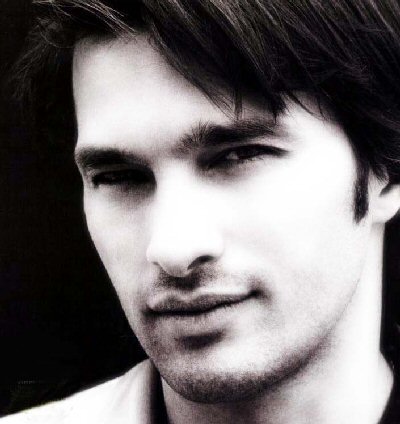
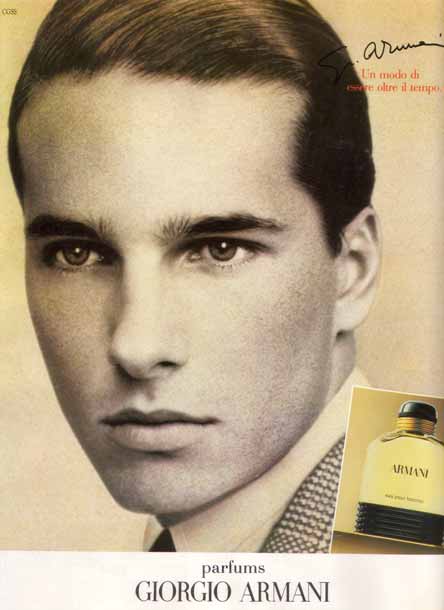
Olivier Martinez

Olivier Martinez

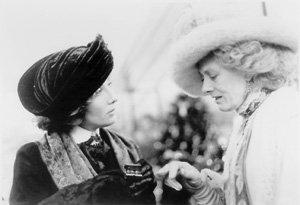
Vanessa Redgrave en Howard's End

Vanessa Redgrave en Howard's End

Raffaella Carrá

Raffaella Carrá

Raffaella Roberta Pelloni (born in Bellaria on 18 June 1943), better known by her artistic name Raffaella Carrà, is an Italian TV hostess, singer and actress. She is especially popular in her native country and in Spain and Latin America where during the past decades she has conducted numerous popular TV shows, mainly in the Italian (RAI) and Spanish (TVE) national TV channels.

She had a big hit song with Tuca Tuca written by her long-time collaborator and boyfriend, Gianni Boncompagni. She had another long relationship with Sergio Japino.

She starred in the motion picture Von Ryan’s Express (1965) with Frank Sinatra, Edward Mulhare, and Trevor Howard. Her greatest international hit single was "A far l’amore comincia tu".

Breakaway

Breakaway

I made my reservation, I’m leaving town tomorrow
I’ll find somebody new and there’ll be no more sorrow
That’s what I do each time, but I can’t follow through
I can’t breakaway, though you make me cry
I can’t breakaway, I can’t say goodbye
No I’ll never never breakaway from you, no, no
No, no, no, no, no,
No, no, no, no, no
No, no, no, no, no.
I’ll make that vow to myself, you and I are through
Nothing can change my mind; I’m sorry won’t do
That’s what I’ll say each time, but I can’t follow through
I can’t breakaway, though you make me cry
I can’t breakaway, I can’t say goodbye
No I’ll never never breakaway from you, no, no
No, no, no, no, no,
No, no, no, no, no
No, no, no, no, no.
Even though you treat me bad and many cruel words are spoken
You have got a spell on me that just can’t be broken, no, no
I’ll take your picture down and throw it away
There’ll be no baby now, for you to call each day
That’s what I’ll say each time, but I can’t follow through
I can’t breakaway, though you make me cry
I can’t breakaway, I can’t say goodbye
No I’ll never never breakaway from you, no, no
No, no, no, no, no,
No, no, no, no, no
No, no, no, no, no.
I can’t breakaway, though you make me cry
I can’t breakaway, I can’t say goodbye
No I’ll never never breakaway from you, no, no
No, no, no, no, no,
No, no, no, no, no
No, no, no, no, no.
I can’t breakaway, I can’t breakaway, I can’t breakaway...

Stand by your man

Stand by your man

Sometimes its hard to be a woman
Giving all your love to just one man
You’ll have bad times
And he’ll have good times
Doing things that you don’t understand
But if you love him you’ll forgive him
Even though he’s hard to understand
And if you love him
Oh be proud of him
’Cause after all he’s just a man
Stand by your man
Give him two arms to cling to
And something warm to come to
When nights are cold and lonely
Stand by your man
And tell the world you love him
Keep giving all the love you can
Stand by your man
Stand by your man
And show the world you love him
Keep giving all the love you can
Stand by your man

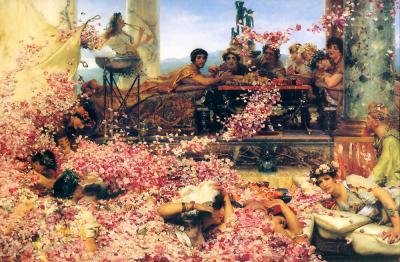
The Roses of Heliogabalus de Alma Tadema

The Roses of Heliogabalus de Alma Tadema

Isabel II

Isabel II

Las lesbianas ocultas de William Shakespeare

Durante cuatrocientos años se pensó que eran invisibles en la obra de William Shakespeare. Ahora, una prestigiosa académica identifica una serie de heroínas lesbianas en sus obras.
Por lo que parece, Hermione, Portia y Beatrice lo eran. El palacio de Cleopatra habría sido un lugar propicio para el amor homosexual y la reina de las hadas, Titania, tenía tendencias sáficas. Esa es la perspectiva de la norteamericana Teodora Jankowski, ex profesora de literatura inglesa de la Universidad de Washington.
En Cuento de invierno, Hermione desaparece durante 16 años cuando su esposo la acusa de tener una aventura. Jankowski plantea que, secretamente correspondida, la cortesana Paulina atendía "todas las necesidades de Hermione, quien se ocultaba en una casa segura en la que una mujer podría abandonarse al erotismo con otra".
En El mercader de Venecia, explica Jankowski, Portia y Bassanio se casan "dando muy pocas evidencias de amarse". Es mucho más probable que Portia estuviera enamorada de Nerissa, su criada.
En Mucho ruido y pocas nueces, Beatrice, el personaje que interpretó Emma Thompson en el cine, podría haber sido amante de Hero, con la que comparte la cama durante un año. Jankowski declara: "Si Hero pudo pecar con un extraño antes de su boda, también es posible que pudiera haberlo hecho con su prima".
Jankowski cita cuatro escenas de Antonio y Cleopatra que tendrían "un nivel muy alto de retórica erótica". Cuando Cleopatra y sus criadas, Iras y Charmian, se reúnen, Charmian dice que prefiere "la longevidad a los higos". Eso haría referencia a la vagina de sus amantes.
Lindsay Posner, que dirige la Royal Shakespeare Company, declaró: "Toda la obra de Shakespeare es tan rica en ambigüedades, que es posible volcar cualquiera de sus obras a las imágenes de nuestra propia cultura.".
La nueva producción de Posner de Noche de Reyes en Stratford-upon-Avon, hace hincapié en la ambigüedad sexual de Viola. "No es algo que yo impuse", dijo. "Es algo que está en el texto y que también Shakespeare debe haber percibido".
"Shakespeare era muy progresista en lo que respecta a la sexualidad. No eludía esos temas. Pero escribía para una sociedad muy conservadora. Es necesario interpretar lo que dice", explica Posner.
Para Jankowski su trabajo llena el "vacío lésbico" que existe en el análisis de la obra de Shakespeare. "Si los hombres invariablemente ignoran a las mujeres del siglo XXI -ya sean lesbianas o heterosexuales-, no es de extrañarse que también se ignore a las mujeres de otras épocas y a los personajes literarios femeninos. Tal vez las lesbianas sean invisibles porque no somos observadores competentes".
Traducción de Cecilia Beltramo

Richard Hrosik aka Karel Rok aka oleg tarkowski

Richard Hrosik aka Karel Rok aka oleg tarkowski

http://albums.photo.epson.com/j/AlbumIndex?u=4220712&a=31358192&sp=169
http://imageevent.com/johnw/hrosik
http://www.g-kazety.cz/freegal/0100/065/index1.htm

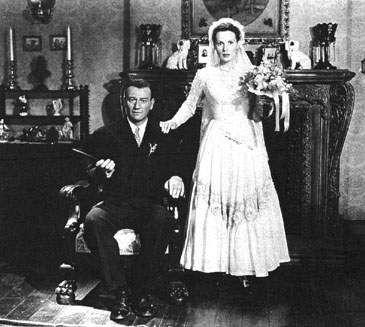
El hombre tranquilo

El hombre tranquilo

http://www.reelclassics.com/Movies/QuietMan/quietman.htm

Meryl Streep en Memorias de Africa

Meryl Streep en Memorias de Africa

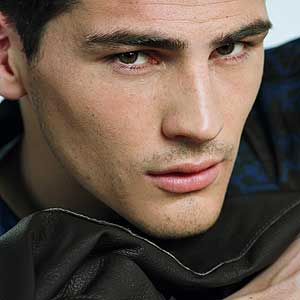
Iker Casillas

Iker Casillas


Date of birth May 20, 1981
Place of birth Madrid, Spain
Height 1,85 m
Nickname Ikerman
Position Goalkeeper
Club information
Current club Real Madrid
Number 1
Professional clubs*
Years Club Apps (goals)
1999 - Real Madrid 236 (0)
National team**
2000 - Spain 64 (0)


Iker Casillas FernándezBorn in Madrid in 1981, Casillas’ entire career has been spent with his hometown club Real Madrid, which he joined as an eight-year old. He first hit the limelight at 17 when he was pulled out of a high school art class to be told he would be on the bench for a Champions League match. His breakthrough came during the 1999-2000 season, when he replaced the injured Bodo Illgner and played in Madrid’s UEFA Champions League triumph in an all-Spanish final against Valencia CF where his senior team mates Raúl González, Fernando Morientes and Steve McManaman scored in a 3-0 win.

Loss of form subsequently allowed César Sánchez to take the starting position as goalkeeper, but Casillas reclaimed the limelight after coming on as substitute for the veteran in the 2002 UEFA Champions League Final against Bayer Leverkusen and preserving Madrid’s 2-1 lead with a series of fine saves.Casillas came on to replace the injured Cesar with 22 minutes remaining at Hampden Park and produced a series of outstanding saves to ensure Real held on to their lead. At one point Leverkusen appeared to be queuing up to score but Casillas was at his best, his efforts to deny Yildiray Basturk and Dimitar Berbatov particularly brilliant.

Again the Real Madrid first choice in the 2002-03 season, an injury-free season saw Casillas play in 15 of his side’s Champions League games as well as all 38 Primera División matches as Madrid reclaimed the Spanish championship. In the 2003-04 season, Casillas was virtually ever-present as Madrid relinquished their crown and lost the Spanish Cup final, missing just one league game.

Despite Casillas’ stellar performances every week, Real Madrid suffered two trophyless seasons in the 2003-04 and 2004-05 seasons. Although Casillas was widely considered the team’s most consistent performer during this lean patch, there was much gossip and speculation regarding a possible transfer to another club. Manchester United was the name that regularly cropped up in newspapers. It was speculated that Casillas was unhappy with his salary, which was paltry in comparison to the amounts earned by some of the team’s bigger stars. However, the saga ended when the player signed a contract extension on the November 30, 2005, tying him to the club till 2011.

[edit] National team

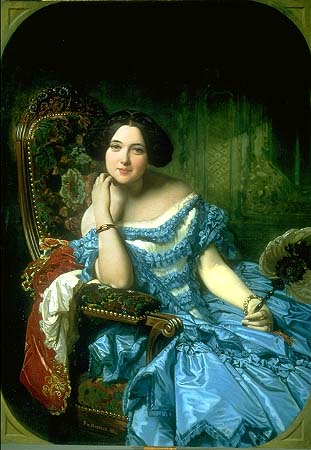
Condesa de Vilches de Federico Madrazo

Condesa de Vilches de Federico Madrazo

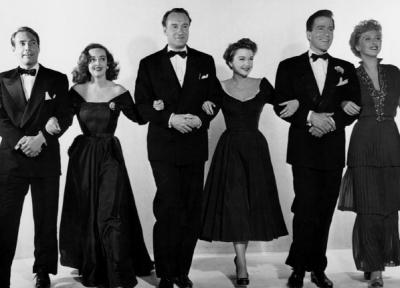
Eva al desnudo

Eva al desnudo

All About Eve is a 1950 movie drama written and directed by Joseph L. Mankiewicz, from the story "The Wisdom of Eve", by Mary Orr.

Bette Davis plays Margo Channing, a highly regarded, aging Broadway actress, with Anne Baxter as Eve Harrington, a young fan who insinuates herself into Channing’s life, ultimately threatening Channing’s career and her personal relationships. Gary Merrill, George Sanders, Hugh Marlowe, Celeste Holm and Thelma Ritter also appear, and the film provided one of Marilyn Monroe’s earliest important roles.

It was nominated for 14 Academy Awards and won six, including Best Picture. Widely regarded as a classic, it has been selected for preservation in the United States National Film Registry.

Directed by Joseph L. Mankiewicz
Produced by Darryl F. Zanuck
Written by Joseph L. Mankiewicz
Starring Bette Davis,
Anne Baxter
Distributed by 20th Century Fox
Release date(s) October 13, 1950 (USA)
Running time 138 min
Language English

Margo Channing, the biggest star on Broadway, is beginning to show her age when she encounters a young woman named Eve who claims to be her biggest fan and who worms her way into Margo’s life, eventually becoming her secretary. Gradually, it is revealed Eve is more scheming and duplicitous than she seems. She begins working to supplant Margo, taking the role of her understudy and engineers Margo’s absence so she can play her role onstage. Eve gives such a good performance her own career as a theatre star begins to take off, and she becomes a bigger star than Margo. At the end of the film, Eve herself encounters an apparently besotted young fan, and it is implied the cycle will continue.

[edit] Background

While performing in The Two Mrs. Carrolls during 1943 and 1944, Elisabeth Bergner allowed a young fan to become part of her household, and employed her as an assistant, but later regretted her generosity when the woman attempted to undermine her. Referring to her only as "the terrible girl", Bergner related the events to Mary Orr, who used it as the basis for a story "The Wisdom of Eve". In the story, Orr attributed a more ruthless character to the girl, and allowed her to succeed in stealing the career of the older actress. Bergner later confirmed the basis of the story in her autobiography Bewundert Viel und Viel Gescholten (Greatly Admired and Greatly Scolded).

In 1949, Mankiewicz was considering a story about an aging actress, and upon reading The Wisdom of Eve felt the conniving girl would be a useful added element. He sent a memo to Darryl F. Zanuck saying it "fits in with an original idea [of mine] and can be combined. Superb starring role for Susan Hayward". Mankiewicz presented a film treatment of the combined stories under the title "Best Performance". He changed the main character’s name from Margola Cranston to Margo Channing and retained several of Orr’s characters, Eve Harrington, Lloyd and Karen Richards, and Miss Caswell, while removing Margo Channing’s husband completely and replacing him with a new character, Bill Sampson. The intention was to depict Channing in a new relationship, and allow Eve Harrington to threaten both Channing’s professional and personal lives. Mankiewicz also added the characters Addison DeWitt, Birdie Coonan, Max Fabian and Phoebe.

Zanuck was enthusiastic and provided numerous suggestions for improving the screenplay. In some sections he felt Mankiewicz’s writing lacked subtlety or provided excessive detail. He suggested diluting Birdie Coonan’s jealousy of Eve so the audience would not recognise Eve as a villain until much later in the story. Zanuck reduced the screenplay by about 50 pages and chose the title All About Eve from the opening scenes in which Addison DeWitt says he will soon tell "about Eve, all about Eve". [1]
Bette Davis was cast as Margot Channing only after Claudette Colbert severely injured her back and was forced to withdraw shortly before filming commenced. Davis, who had recently ended a 19-year association with Warner Brothers after several poorly received films, later commented she had read the script in one sitting and immediately accepted the role after realizing it was one of the best she had ever read. Channing had originally been conceived as genteel and knowingly humorous, but with the casting of Davis, Mankiewicz revised the character to be more abrasive. Among other actresses considered were Mankiewicz’s original inspiration, Susan Hayward, rejected by Zanuck as "too young", Marlene Dietrich, dismissed as "too German", and Gertrude Lawrence, who was ruled out of contention when her agent suggested, "Wouldn’t it be nice if Gertie sat by the piano and sang?" Zanuck favored Barbara Stanwyck, but she was not available.

Anne Baxter had spent a decade in supporting roles, and had won the Academy Award for Best Supporting Actress for The Razor’s Edge the previous year. She got the role of Eve Harrington after the first choice, Jeanne Crain, became pregnant. Crain was at the height of her popularity and had established a career playing likable heroines; Zanuck believed she lacked the "bitch quality" required by the part, and audiences would not accept her as a deceitful character.

The role of Bill Sampson was originally intended for John Garfield or Ronald Reagan. Reagan’s wife Nancy Davis was considered for Karen Richards and Jose Ferrer for Addison DeWitt. Zsa Zsa Gabor actively sought the role of Phoebe without realizing the producers were considering her, along with Angela Lansbury, for Miss Caswell.
Mankiewicz greatly admired Thelma Ritter, and wrote the character of Birdie Coonan for her after working with her on A Letter to Three Wives in (1949). As Coonan was the only one immediately suspicious of Eve Harrington, he was confident Ritter would contribute a shrewd characterisation casting doubt on Harrington and providing a counterpoint to the more "theatrical" personalities of the other characters. Marilyn Monroe, relatively unknown at the time, was cast as Miss Caswell, referred to by DeWitt as a "graduate of the Copacabana School of Dramatic Art". Monroe got the part despite Zanuck’s initial antipathy and belief she was better suited to drama. Smaller roles were filled by Gregory Ratoff as the producer Max Fabian, Barbara Bates, as Phoebe, a young fan of Eve Harrington, and Walter Hampden as the master of ceremonies at an award presentation. [1]

The final cast comprised Davis and Baxter, with Gary Merrill as Bill Sampson, Hugh Marlowe as the writer Lloyd Richards, Celeste Holm as his wife Karen, and George Sanders as the "venomous fish-wife" theatre critic, Addison DeWitt.

The film opens with the image of an award trophy, described by DeWitt as the "highest honor our theater knows - the Sarah Siddons Award for Distinguished Achievement." In 1952, a small group of distinguished Chicago theater-goers began to give an award with that name and sculpted to look like the one of Siddons used in the film to actors. It has been given annually, with past honorees including Angela Lansbury, Bernadette Peters, Celeste Holm and Barbara Rush.

[edit] Awards

[edit] Academy Awards (USA)

* Best Picture - Darryl F. Zanuck, producer
* Best Supporting Actor - George Sanders
* Best Costume Design for a Black-and-White film - Edith Head and Charles Le Maire
* Best Director - Joseph L. Mankiewicz
* Best Writing, Screenplay - Joseph L. Mankiewicz
* Best Sound Recording - Thomas T. Moulton
* Nominated: Best Leading Actress - Anne Baxter
* Nominated: Best Leading Actress - Bette Davis
* Nominated: Best Supporting Actress - Celeste Holm
* Nominated: Best Supporting Actress - Thelma Ritter
* Nominated: Best Set Direction for a Black-and-White film - George W. Davis, Thomas Little, Walter M. Scott, and Lyle R. Wheeler
* Nominated: Best Cinematography for a Black-and-White film - Milton R. Krassner
* Nominated: Best Film Editing - Barbara McLean
* Nominated: Best Music Score - Alfred Newman

[edit] Golden Globe Awards (USA)

* Best Motion Picture Screenplay - Joseph L. Mankiewicz
* Nominated: Best Drama Motion Picture - Darryl F. Zanuck, producer
* Nominated: Best Drama Motion Picture Actress - Bette Davis
* Nominated: Best Motion Picture Director - Joseph L. Mankiewicz
* Nominated: Best Supporting Actor in a Motion Picture - George Sanders
* Nominated: Best Supporting Actress in a Motion Picture - Thelma Ritter

[edit] NYFCC Awards (USA)

* Best Motion Picture - Darryl F. Zanuck
* Best Director - Joseph L. Mankiewicz
* Best Actress - Bette Davis

[edit] DGA Awards (USA)

* Oustanding Directorial Achievement in a Motion Picture - Joseph L. Mankiewicz

[edit] Cannes Film Festival (France)

* Best Actress Prize - Bette Davis
* Jury Special Prize - Joseph L. Mankiewicz
* Nominated: Grand Prize of the Jury - Joseph L. Mankiewicz

[edit] BAFTA (UK)

* Best Film - Darryl F. Zanuck

[edit] Later recognition

* In 1970, the film was made into a successful Broadway musical, Applause, with Lauren Bacall in the role of Margo Channing.
* In 1989, the movie was selected for preservation in the United States National Film Registry.
* The film received in 1997 a placement on the Producers Guild of America Hall of Fame.
* In 1998, the movie ranked #16 on the American Film Institute list of the 100 Best American movies of all time.
* In 2003, the character of Eve Harrington (interpreted by Anne Baxter) ranked #23 on the American Film Institute list of the 50 Best Villains of American Cinema.
* In 2005, the phrase "fasten your seatbelts. It’s going to be a bumpy night" (said on the film by the character of Margo Channing) ranked #9 on the American Film Institute list of the 100 Best Movie Quotes of American Cinema.
* It is rumored that the infamous box-office flop Showgirls was a loose remake of "All about Eve"

At last

At last

At last my love has come along
My lonely days are over
And life is like a song
At last the skies above are blue
And my heart was wrapped up in clover
The night I looked at you
I found a dream that I can speak to
A dream that I could call my own
I found a thrill to press my cheek to
A thrill that I have never known
You smiled, and then the spell was cast
And here we are in heaven
And you are mine at last

Marilyn, de Andy Warhol

Marilyn, de Andy Warhol

Rebeca (1940)

Rebeca (1940)

A shy ladies companion is staying in Monte Carlo with her stuffy employer when she meets the wealthy Maxim de Winter. Max is still troubled by the death of his wife, Rebecca in a boating accident the year before. She and Max fall in love, get married and return to Manderlay, his large country estate in Cornwall. The second Mrs. de Winter meets the housekeeper Mrs. Danvers and discovers that Rebecca still has a strange hold on everyone at Manderlay.

Directed by
Alfred Hitchcock

Writing credits
Daphne Du Maurier (novel)
Philip MacDonald (adaptation) ...
(more)

Cast overview, first billed only:

Laurence Olivier .... ’Maxim’ de Winter

Joan Fontaine .... The Second Mrs. de Winter
George Sanders .... Jack Favell
Judith Anderson .... Mrs. Danvers
Nigel Bruce .... Major Giles Lacy
Reginald Denny .... Frank Crawley
C. Aubrey Smith .... Colonel Julyan
Gladys Cooper .... Beatrice Lacy
Florence Bates .... Mrs. Edythe Van Hopper
Melville Cooper .... Coroner
Leo G. Carroll .... Dr. Baker
Leonard Carey .... Ben
Lumsden Hare .... Tabbs
Edward Fielding .... Frith
Forrester Harvey .... Chalcroft
(more)

Runtime: 130 min
Country: USA
Language: English
Color: Black and White